
One of the first questions we are asked when someone starts planning Africa is:
How much does an African safari actually cost?
The frustrating answer is that there is no single safari price.
In 2026, you can find safari lodges charging the equivalent of a few hundred US dollars per person per night, while some of Africa's most exclusive camps exceed USD 5,000 per person per night.
Both are safaris.
If you are still choosing a country, start with our guide to your first safari destination.
For the decisions behind a complete itinerary, read our complete safari planning guide.
But they are not remotely the same product.
Where you travel, when you travel, how you get there, whether you want a private vehicle, the size of the camp and even how many people are travelling can change the final cost dramatically.
So instead of giving you an arbitrary average, this guide explains where your money actually goes and how to build the right safari around your budget.
The short answer
For a well-designed African safari in 2026, these are useful broad planning ranges:
2026 safari lodge planning ranges, in USD
Scroll horizontally to compare all columns.
| Safari level | Approximate cost per person per night |
|---|---|
| Good quality safari | USD 400 to USD 800 |
| Luxury safari | USD 800 to USD 1,500 |
| High-end luxury safari | USD 1,500 to USD 3,000 |
| Ultra-luxury safari | USD 3,000 to USD 5,000+ |
These are Mason & Wild’s broad accommodation planning ranges, per adult per night on a sharing basis. They are not live quotes or all-in journey prices. International and internal flights, transfers, private vehicles, visas, insurance, gratuities and any separately charged park fees or levies need to be budgeted in addition. Confirm each property’s inclusions, taxes, currency, season and room category.
These figures are planning ranges, not fixed rates.
They also do not mean that spending USD 3,000 per night automatically gives you three times the safari experience of a USD 1,000 lodge.
That is where good safari design matters.
A brilliant guide at a smaller camp in the right wildlife area can give you a better safari than an architecturally spectacular lodge in the wrong location.
And we would rather put your money into the things that actually improve your journey.
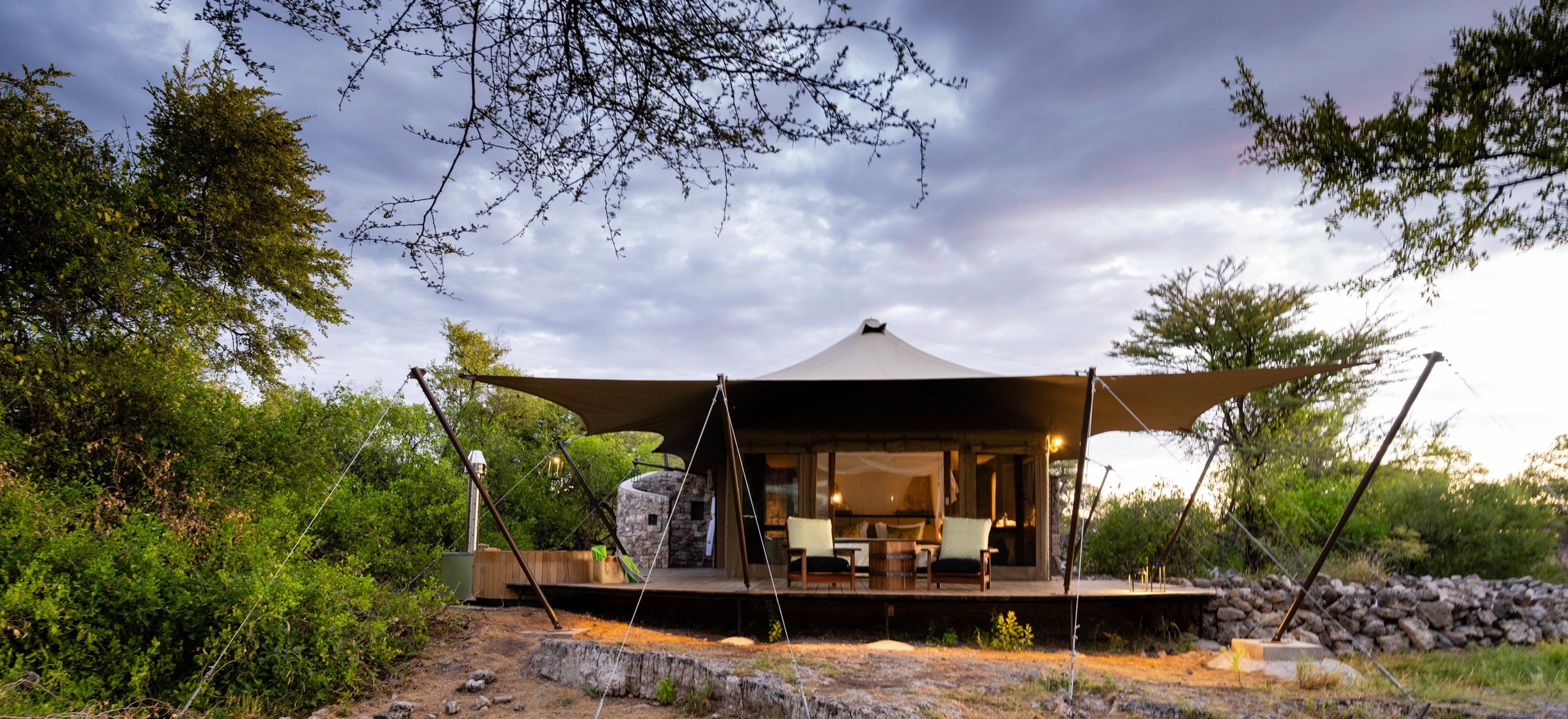
Safari accommodation across a broad price spectrum
What does a safari lodge rate actually include?
This is one of the biggest differences between safari pricing and conventional hotel pricing.
If you see a city hotel advertised at USD 700 per night, you are usually buying a room.
A safari lodge charging USD 1,200 per person per night may be including:
- Your accommodation
- Breakfast, lunch and dinner
- Morning safari
- Afternoon and evening safari
- Professional guide
- Tracker at many properties
- Selected alcoholic and non-alcoholic drinks
- Laundry
- Bush walks
- Airstrip transfers
- Park or conservation fees at some properties
- Other camp activities
This varies enormously between lodges, so every quote needs to be checked properly.
For example, Wilderness' Botswana camps generally publish fully inclusive rates covering accommodation, meals, twice-daily activities, park fees, laundry and local drinks. At Singita's South African properties, meals, beverages, twice-daily safaris, walking safaris and laundry are among the inclusions, while certain levies and transport to the reserve remain additional.
In Tanzania, a lodge might include your accommodation, meals, drinks and safari activities while park and concession fees sit separately.
That is why comparing safari prices based only on the room rate can be misleading.
Published rate sources: Wilderness Mombo: inclusions and rates · Singita Sweni: inclusions and exclusions
What do safari prices actually look like in 2026?
A few real published rates demonstrate how wide the market is.
South Africa
South Africa has one of the broadest safari price ranges in Africa.
At the more accessible end of the private safari market, Umkumbe Safari Lodge in the Sabi Sand publishes 2026 standard room rates from R6,510 per adult sharing per night.
At the other end of the same broader safari region, Singita Sweni publishes rates of up to R60,470 per adult per night during its 2026 peak periods.
That is almost a tenfold difference.
Both properties provide access to exceptional wildlife areas.
The difference comes from accommodation, service levels, exclusivity, food and beverage offering, property design, staff ratios, guiding structure and the overall experience surrounding the safari.
This is precisely why asking, “How much does Kruger cost?” is almost impossible to answer without understanding what kind of traveller you are.
Published rate sources: Umkumbe: published 2026 rates · Singita Sweni: published 2026 rates
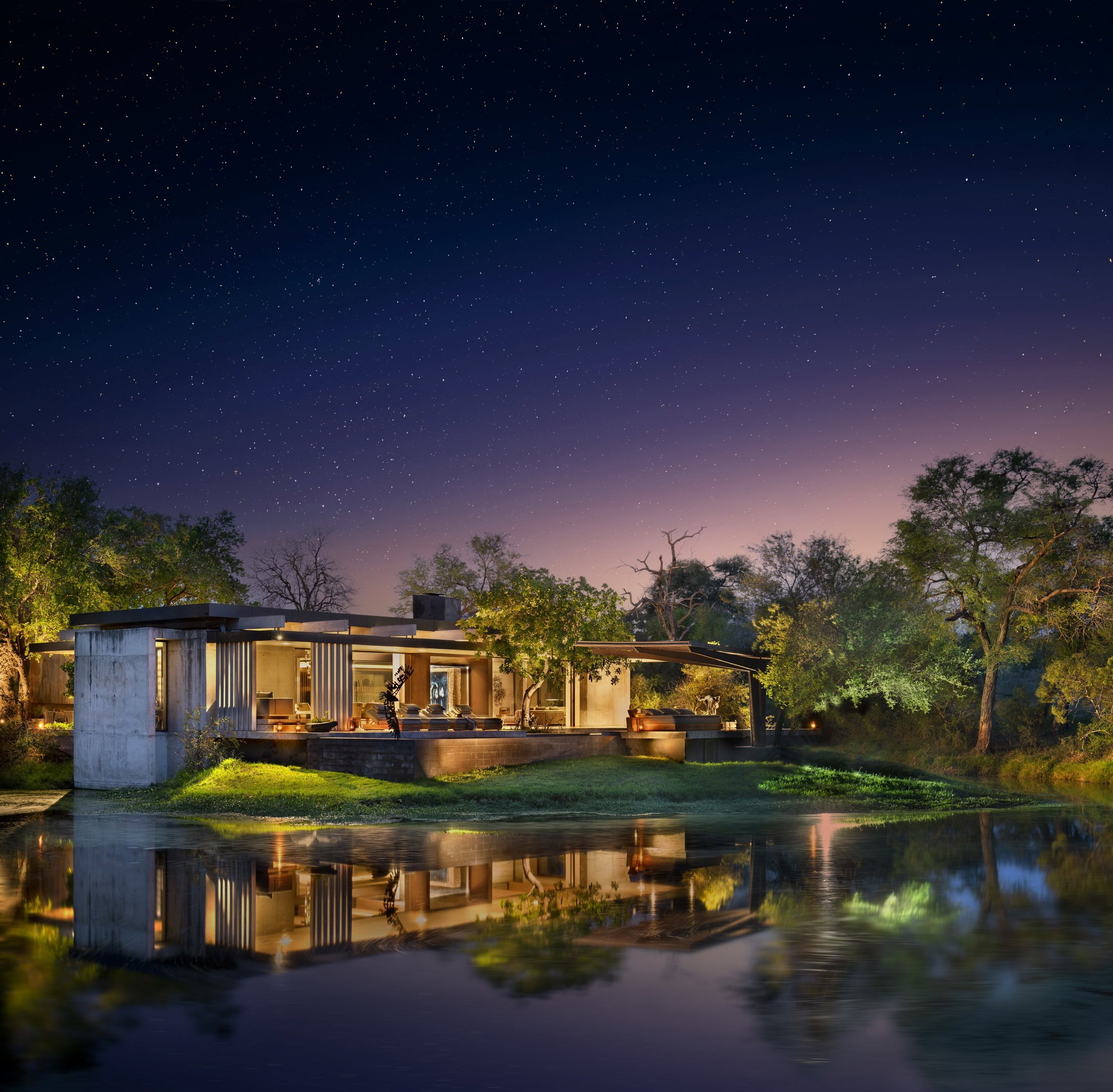
Design and space at the luxury end
Botswana
Botswana is generally one of Africa's more expensive safari destinations.
There is a reason.
Much of Botswana's premium safari model is deliberately low-volume and high-value. Small camps operate in enormous wilderness areas, and many are reached by light aircraft rather than road.
That creates extraordinary exclusivity.
It also increases the cost.
At Atzaró Okavango, published 2026 rates range from USD 740 per person per night during Emerald Season to USD 1,980 in peak season.
At Wilderness Chitabe, peak 2026 rates reach USD 3,392 per person per night.
At Wilderness Mombo, one of Botswana's most celebrated safari camps, the June to October 2026 rate is USD 5,043 per person per night.
Same country.
Very different price points.
Published rate sources: Atzaró Okavango: 2026 rates · Wilderness Chitabe: 2026 rates · Wilderness Mombo: 2026 rates
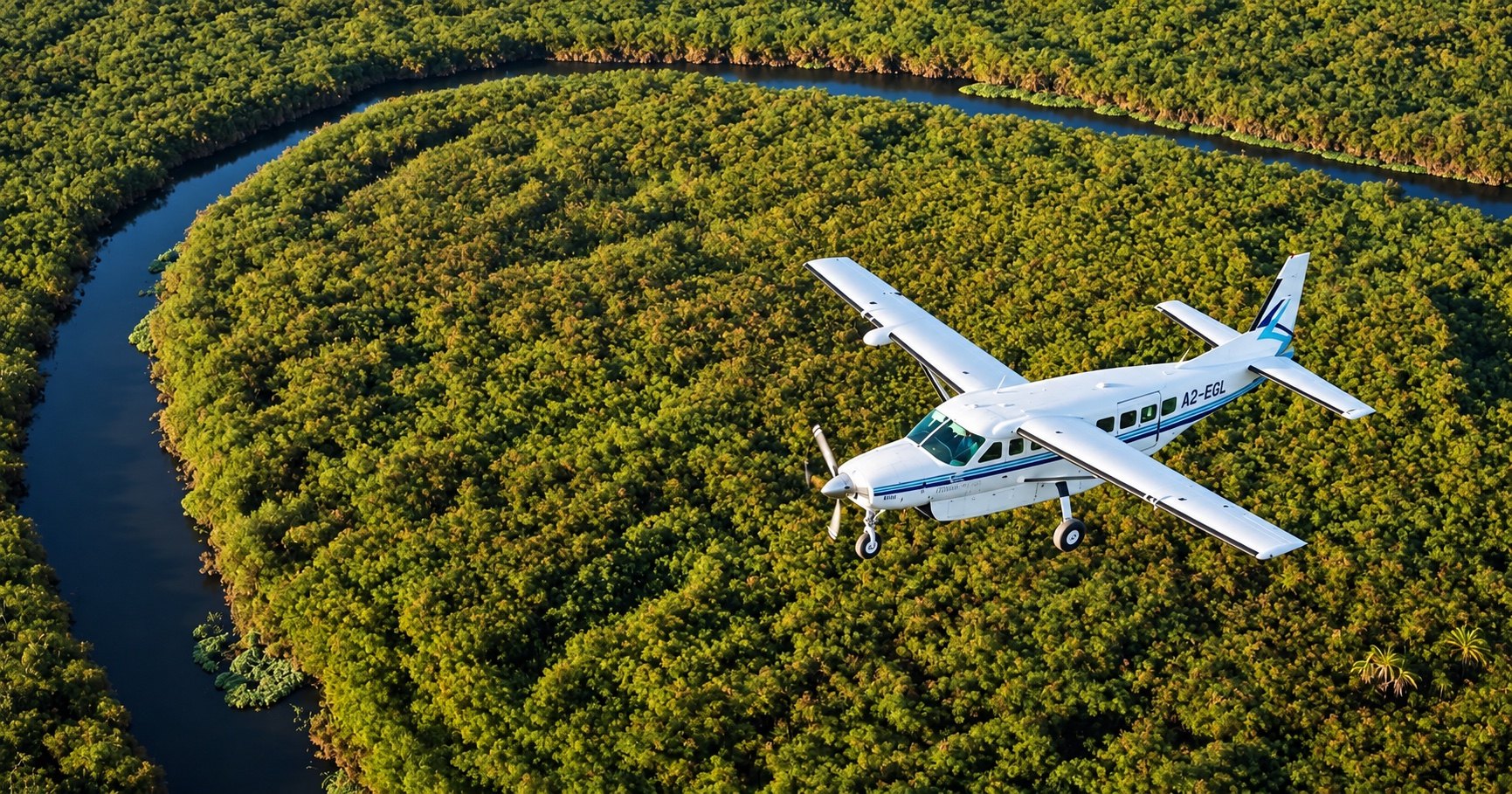
Light-aircraft access, Botswana
Tanzania
Tanzania sits differently again.
The Serengeti and Ngorongoro safari circuits involve park fees, concession fees, vehicles, guides and often internal flights.
Location matters enormously.
A camp positioned in the right area for the Great Migration at a particular time of year can command a premium because travellers are paying not only for the accommodation but also for access to a particular wildlife event.
For perspective, &Beyond Serengeti Under Canvas publishes 2026 rates between USD 1,080 and USD 1,640 per person per night, depending on the season. The camp moves during the year in an attempt to remain close to different stages of the Great Migration.
This is one of the reasons we do not recommend choosing a Serengeti lodge based purely on which property looks best online.
Where it is located in relation to what you want to experience can matter much more.
Published rate sources: &Beyond Serengeti Under Canvas: 2026 rates
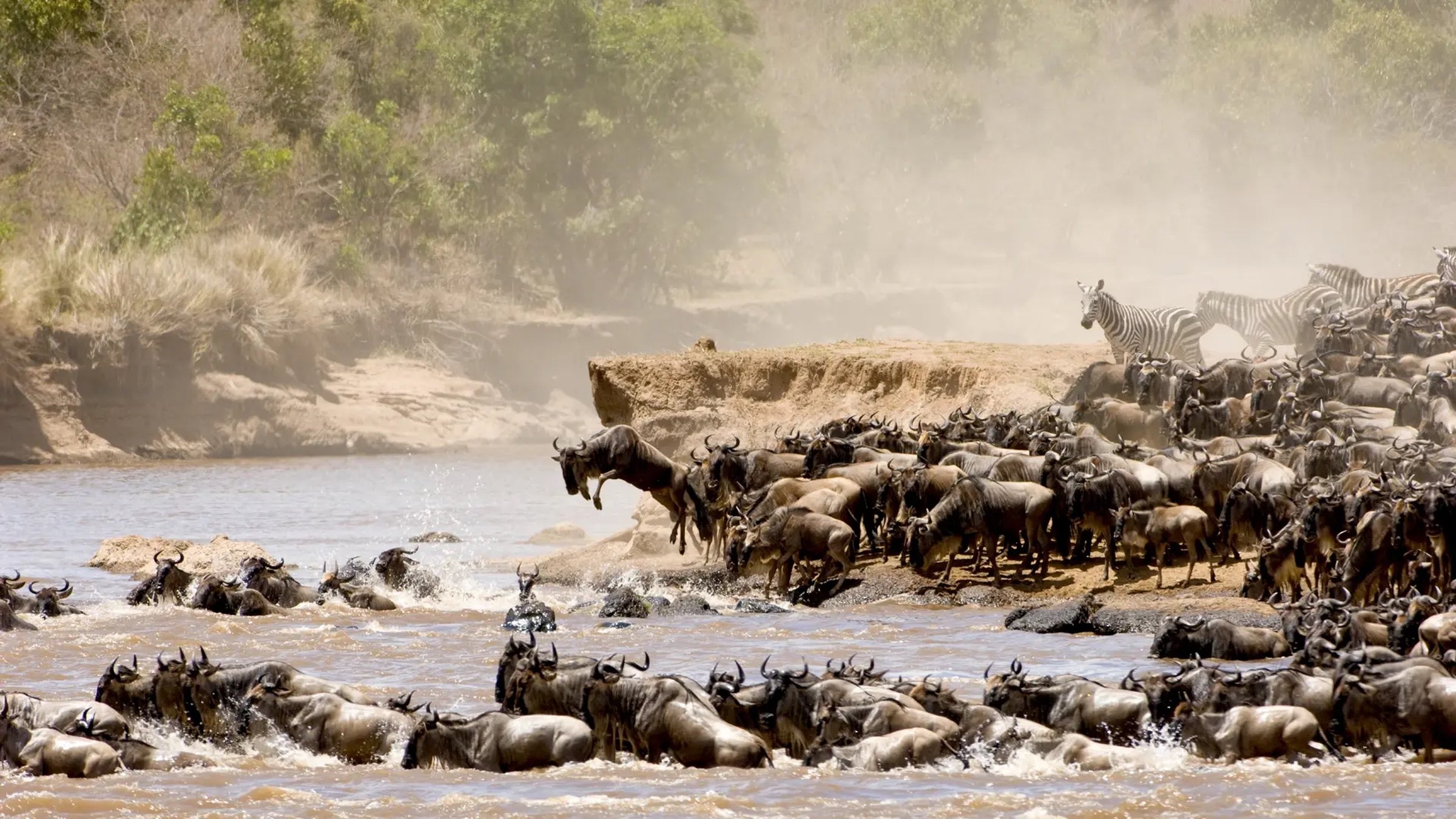
The Great Migration
Zambia
Zambia can offer exceptional value at the luxury end of the safari market, particularly for travellers who value guiding, walking safaris and smaller camps.
Time + Tide's published 2026 South Luangwa rates, for example, range from approximately USD 840 to USD 1,840 per adult per night, depending on the camp and season, with additional park fees and conservation levies.
Zambia is also one of the destinations where we would often encourage a traveller to spend money on the quality of the safari experience itself rather than simply the most elaborate room.
South Luangwa is one of Africa's great guiding destinations.
That matters.
Published rate sources: Time + Tide: South Luangwa 2026 rates
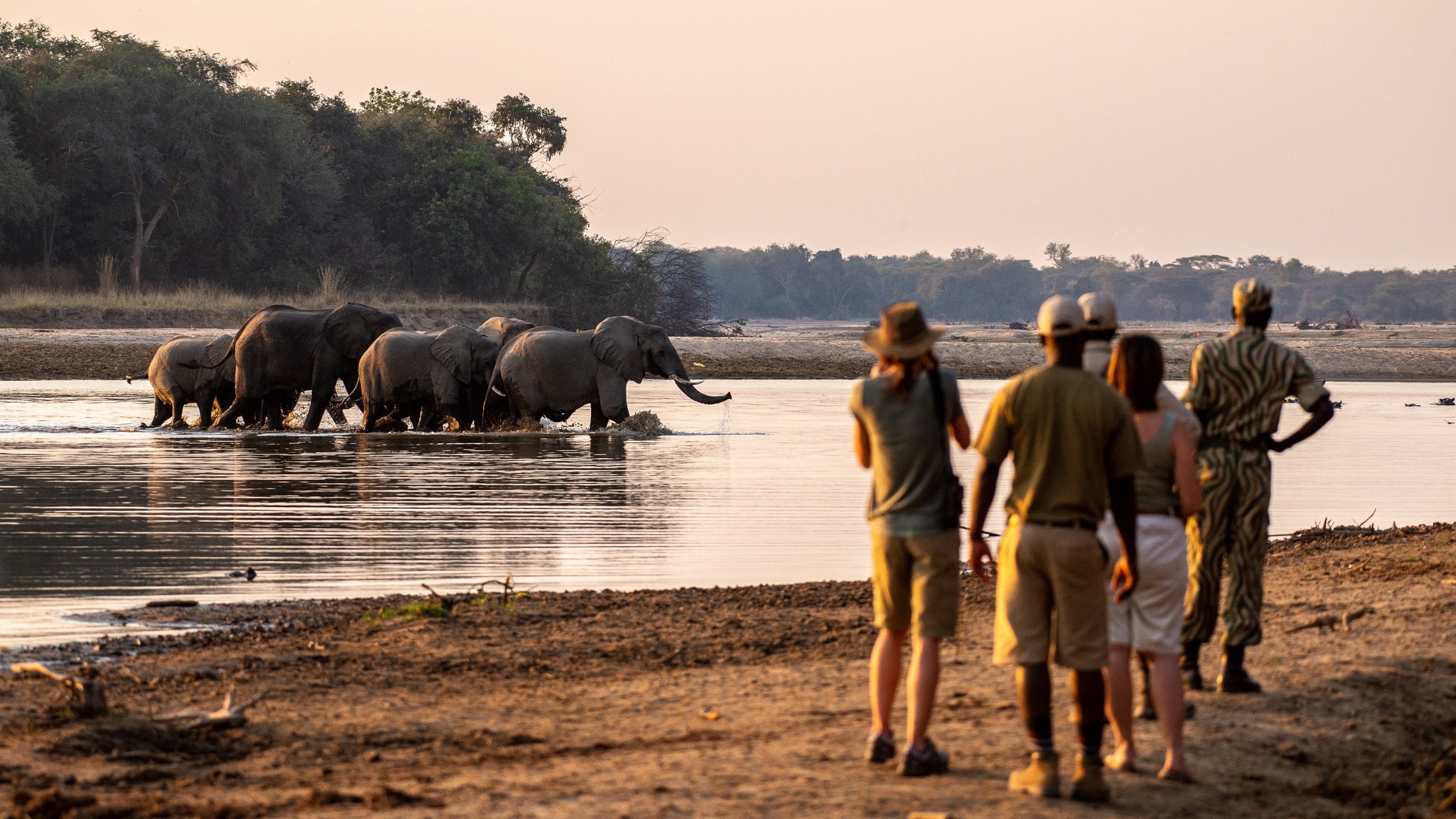
Guiding and walking safaris
Why is Botswana often more expensive than South Africa?
This is a good example of why safari pricing needs context.
You might find two equally beautiful five-star safari lodges, one in South Africa and one in Botswana, with Botswana costing substantially more.
That does not necessarily mean the Botswana lodge is more luxurious.
You may be paying for:
Remoteness
Some camps can only realistically be reached by light aircraft.
Low guest density
Botswana's safari model in areas such as the Okavango Delta deliberately limits tourism pressure.
Huge wilderness concessions
A small camp may have access to an enormous private area.
Logistics
Everything from wine to fresh produce may need to be transported into remote wilderness areas.
Seasonality
Some areas become particularly desirable when water levels or wildlife concentrations are at their best.
This is a different kind of luxury.
Sometimes the thing you are paying for is space.
For a closer look at the main options, compare South Africa, Botswana, Tanzania and Zambia.
The seven things that change your safari price the most
1. Where you go
Country choice has a major impact on budget.
As a very broad rule:
South Africa offers perhaps the widest luxury spectrum.
Botswana usually commands a premium for exclusivity and remoteness.
Tanzania can become expensive once park fees, private vehicles and internal flights are included.
Zambia and Zimbabwe can offer excellent safari value, particularly for experienced safari travellers.
Namibia offers everything from self-drive journeys to extraordinary high-end fly-in itineraries.
Rwanda can carry significant additional costs when gorilla trekking permits are included.
The cheapest destination is not necessarily the best value.
And the most expensive destination is not automatically the best safari.
Explore destination guides: South Africa · Botswana · Tanzania · Zambia · Zimbabwe · Namibia · Rwanda
2. When you travel
Season is one of the most powerful tools we have when designing a safari budget.
Look at Botswana.
Wilderness Little Vumbura is published at USD 2,940 per person per night from June through October 2026, but drops to USD 1,792 from 1 November to 19 December 2026.
Same camp.
Same staff.
Same beds.
Same concession.
Different travel dates.
Atzaró Okavango varies from USD 740 during Emerald Season to USD 1,980 during peak season.
This does not mean low season is always better.
You need to understand why the price has changed.
Rainfall, wildlife movement, water levels, heat, camp closures and accessibility can all influence seasonal pricing.
But if your dates are flexible, seasonality can create enormous value.
Published rate sources: Wilderness Little Vumbura: seasonal rates · Atzaró Okavango: seasonal rates
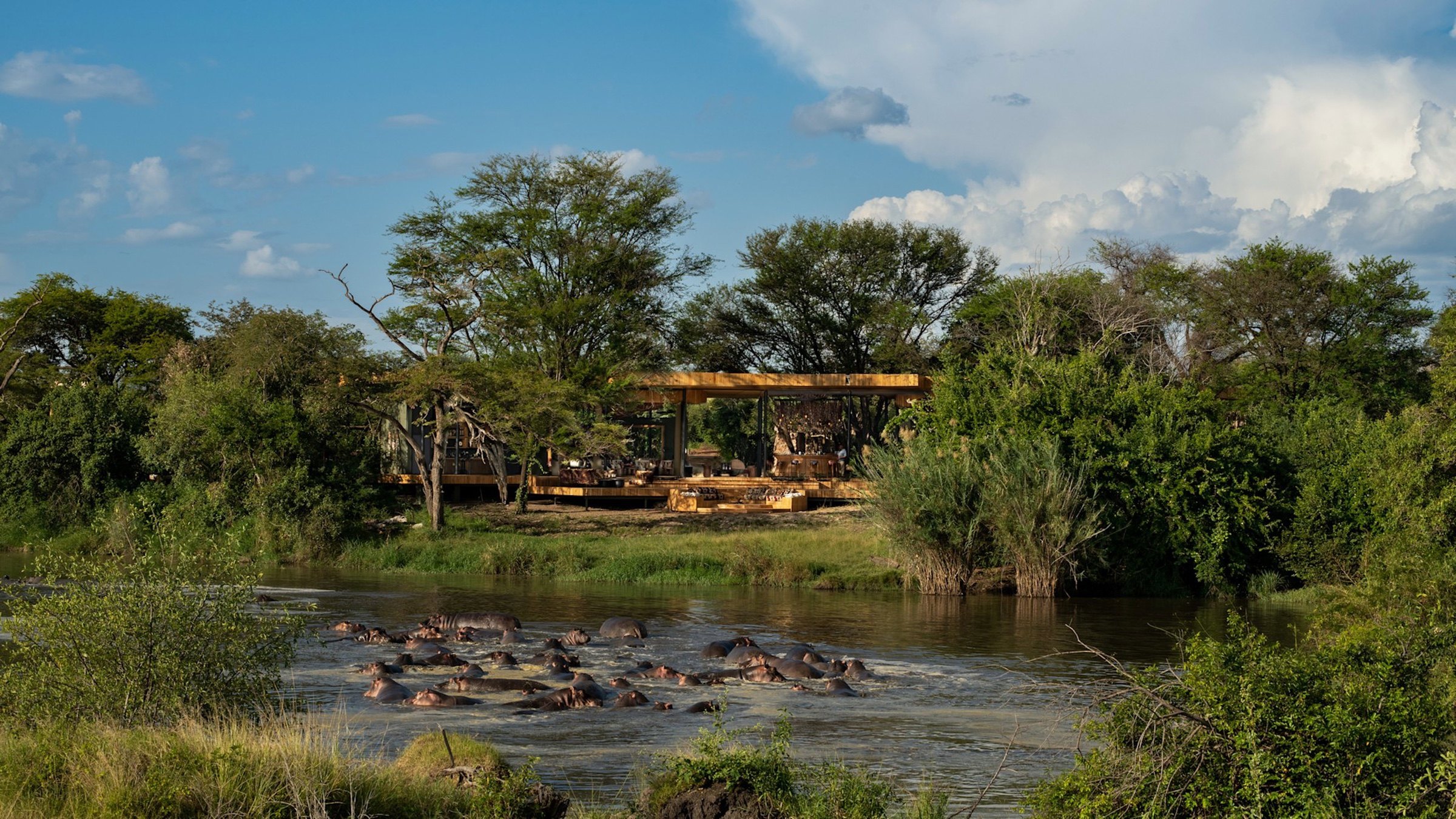
Season changes the setting and the price
3. How remote the camp is
Remote wilderness usually costs money.
A lodge two hours by road from a major airport operates very differently from a six-room camp deep in the Okavango Delta.
The second property may require:
- Charter flights
- Aircraft transfers
- Boat transfers
- Remote staff accommodation
- Complex food supply chains
- Generators or solar infrastructure
- Water treatment
- Waste removal
- Emergency evacuation planning
That infrastructure is largely invisible to the guest.
But it affects the rate.
4. Whether you want a private safari vehicle
Most safari lodges operate shared game drives.
Depending on the property, your vehicle may carry four, six or more guests.
For many travellers, this is perfectly enjoyable.
But some guests should seriously consider a private vehicle.
Families.
Photographers.
Travellers with mobility requirements.
Guests who want total flexibility.
People who have been on safari several times and want to focus on particular wildlife.
Honeymooners who value privacy.
A private vehicle can add a significant daily cost, particularly in East Africa and at high-end lodges.
But for the right traveller, it can completely change the safari.
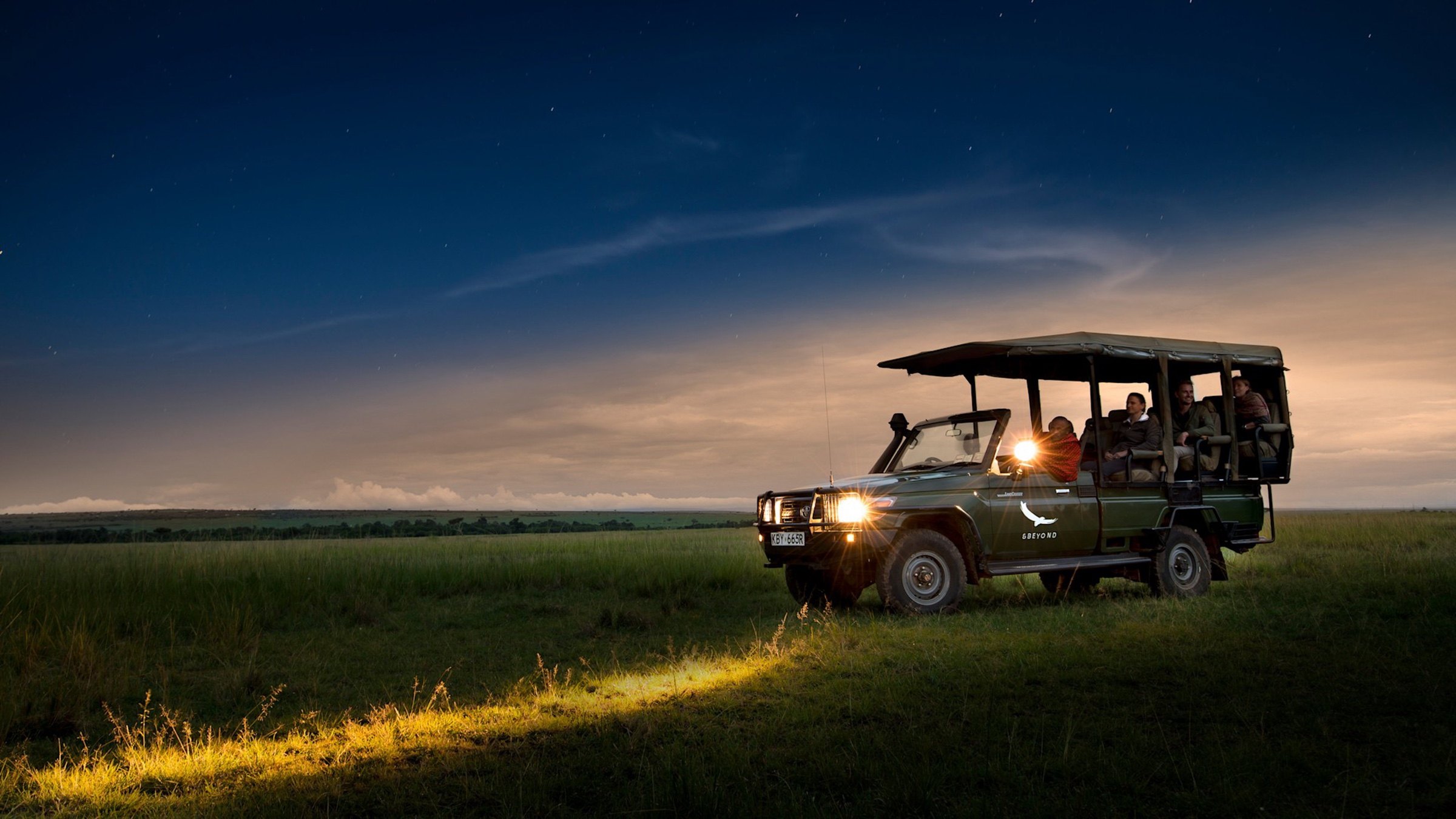
Time in the bush, at your own pace
5. How many camps you visit
More camps do not automatically create a better safari.
This is one of the easiest ways to spend money unnecessarily.
Imagine a seven-night safari.
You could do:
2 nights + 2 nights + 3 nights
and spend a significant portion of your holiday packing, checking out, transferring to airstrips, flying and unpacking again.
Or you could do:
3 nights + 4 nights
with enough time to understand each area properly.
The second itinerary may cost less.
It may also be considerably better.
One of the most common mistakes in African itinerary design is treating the number of destinations visited as a measure of value.
It isn't.
6. Whether you travel alone
Safari pricing has traditionally been designed around two people sharing a room.
Solo travellers can therefore encounter single supplements.
The policies vary considerably between properties and seasons.
Some lodges waive them during certain months.
Others only apply a single supplement after a certain number of solo rooms within the same booking.
Others charge it throughout the year.
If you are travelling alone, this is something your safari specialist should actively design around rather than simply accepting every supplement presented.
7. Your idea of luxury
This might be the most important factor.
Luxury means different things to different people.
For one traveller it means:
a plunge pool, enormous suite, private wine cellar and spa.
For another:
six tents, no other vehicle at a sighting and an exceptional guide.
For another:
a private villa for their family.
For another:
being able to walk through South Luangwa with one of Zambia's best guides.
For another:
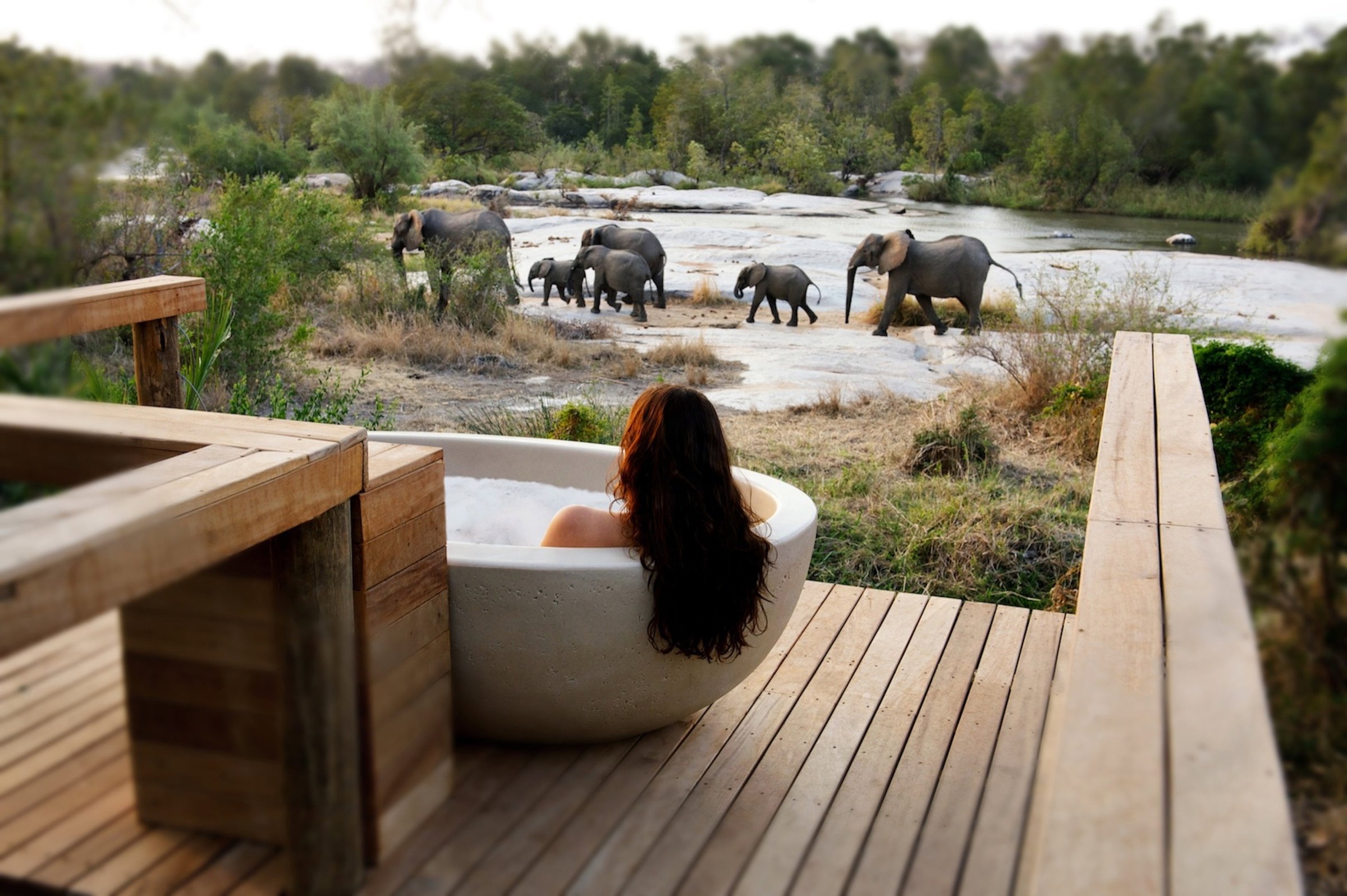
watching elephants from bed.
There is no point paying for a wine cellar if you do not drink wine.
There is no point paying for a huge villa if you intend to spend every daylight hour outside.
And there is no point choosing a cheaper camp if doing so means sacrificing the wildlife experience you travelled to Africa for.
The job is not to find the most expensive safari your budget allows.
It is to decide where spending more actually improves your trip.
A USD 1,500 safari lodge does not mean your entire holiday costs USD 1,500 per day
This is one of the biggest misconceptions we see when travellers begin budgeting.
Imagine a 12-night African journey:
An illustrative 12-night journey, not a priced package
Scroll horizontally to compare all columns.
| Chapter | Nights |
|---|---|
| Cape Town | 4 |
| Winelands | 2 |
| Safari | 4 |
| Victoria Falls | 2 |
Only four of those twelve nights are safari nights.
Your Cape Town hotel may cost considerably less than your safari lodge because you are not paying for professional guides, game drives, conservation operations, three meals per day and a remote wilderness infrastructure.
That means your trip should be budgeted as a complete journey, not by multiplying the most expensive night's rate by the total number of nights.
This is why Africa can often be designed more intelligently than travellers initially realise.
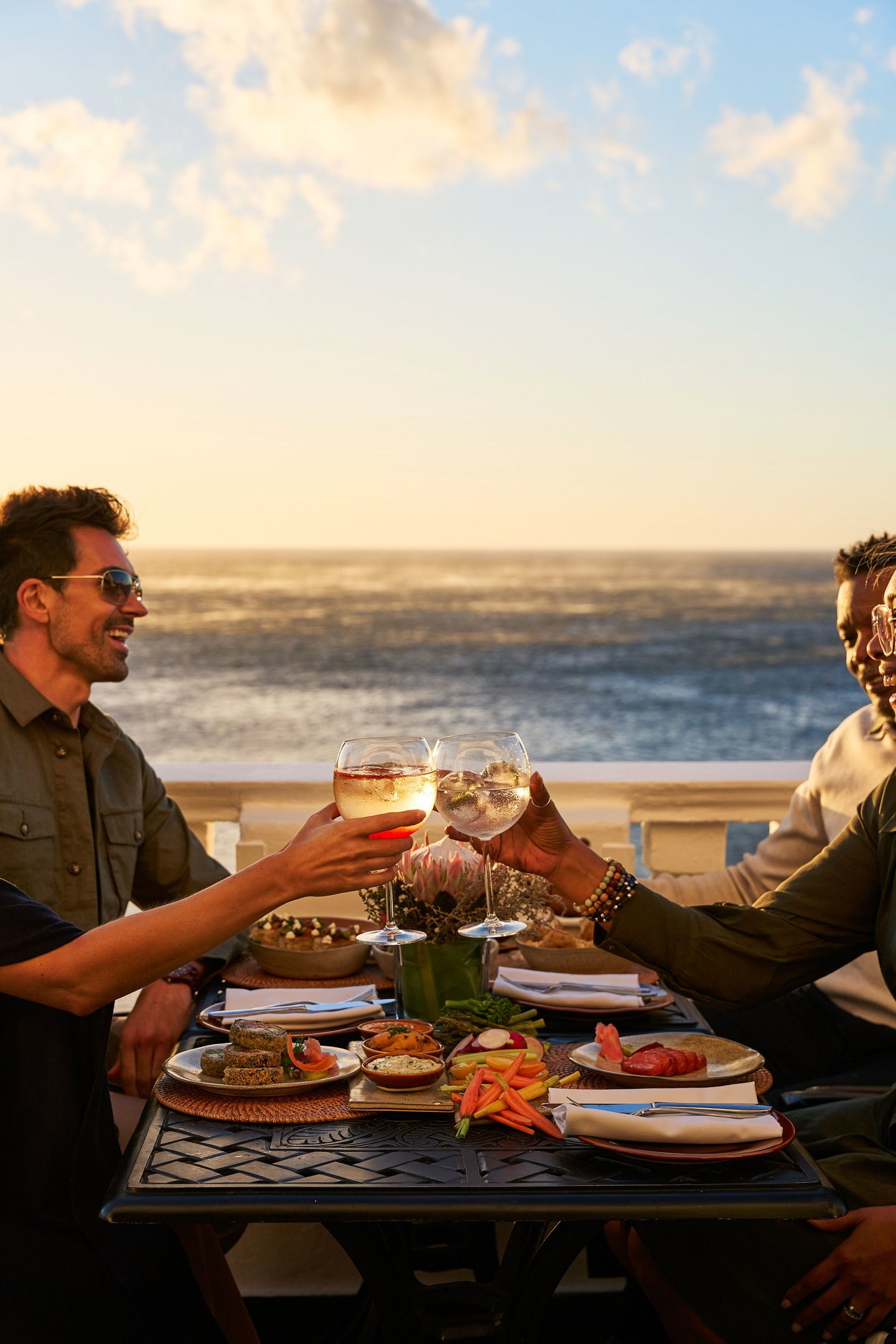
Combining safari with city and coastal time
Where should you spend more?
If we have to choose, these are the areas where spending more can genuinely improve an African journey.
Location
Pay for the right wildlife area before paying for a bigger bathroom.
Guiding
A great guide can transform a safari.
Privacy
If privacy genuinely matters to you, private concessions, smaller camps and private vehicles can be worth the premium.
Time
Sometimes another night is more valuable than upgrading the room.
Logistics
A sensible flight can be worth more than saving money and losing an entire day driving.
Experiences that matter to you
Walking safari.
Mokoro.
Gorilla trekking.
Private photographic vehicle.
Helicopter flight.
Sleep-out.
Boat safari.
Do not add experiences simply because they appear on a luxury travel checklist.
Choose the ones you actually care about.
Where can you save without damaging the experience?
This is where good itinerary design earns its value.
Travel in shoulder season
You can sometimes stay at the exact same property for considerably less.
Combine expensive and less expensive nights
Not every night of a 14-day journey needs to cost USD 2,000 per person.
Stay longer in fewer places
Reduce unnecessary flights and transfers.
Use scheduled flights instead of private charters
Private aviation is fantastic when it genuinely improves the journey.
It is unnecessary when a good scheduled safari flight already exists.
Choose the right room category
At many lodges, the entry-level room still receives the same guiding, food and wildlife experience as the most expensive suite.
Spend according to the destination
We might spend more on safari and less in Johannesburg.
Or invest heavily in a remote Botswana camp while choosing a simpler Cape Town hotel because you intend to spend your days exploring the city.
It should be deliberate.
What does “value” mean on safari?
Safari value cannot be measured only in thread count and square metres.
Imagine two lodges.
One costs USD 1,000 per person per night.
The other costs USD 1,400.
The cheaper lodge has twenty rooms, larger safari vehicles and operates in an area with several neighbouring properties.
The more expensive lodge has six rooms, excellent guiding and access to a private concession where you rarely see another vehicle.
For a traveller prioritising wilderness and privacy, the second lodge may represent substantially better value.
For a family wanting extensive facilities, the first might be better.
Value is personal.
That is why our first conversation with a client is not:
“How much money do you have?”
We want to understand:
Why Africa?
What are you hoping to experience?
Who is travelling?
Have you been on safari before?
What matters to you?
What would make the trip exceptional?
Then we look at the budget.
How much should I budget for my first African safari?
If you are at the very beginning of planning, do not start by choosing lodges.
Start with four things:
1. How many people are travelling?
A couple, family or group creates completely different opportunities.
2. How long do you have?
You do not necessarily need fourteen safari nights.
For many first-time visitors, combining safari with somewhere like Cape Town, the Winelands, Victoria Falls or the Indian Ocean creates a much better journey.
3. When can you travel?
Being flexible by even a few weeks can materially change the cost.
4. What experience are you actually buying?
If your dream is the Great Migration, say that.
If your dream is walking safari, say that.
If you want extraordinary leopard viewing, tell us.
If you want remote wilderness and hardly another vehicle in sight, tell us.
Those answers determine where your money should go.
Is an African safari worth the money?
A safari is expensive.
There is no reason to pretend otherwise.
Remote camps are expensive to operate. Good guides are highly skilled professionals. Conservation areas require funding. Light aircraft, vehicles, maintenance, staff, food, logistics and infrastructure all have real costs.
But safari is also unlike most forms of luxury travel.
The primary product is not the room.
It is access.
Access to wilderness.
Access to exceptional guides.
Access to wildlife.
Access to landscapes you cannot recreate elsewhere.
Some of the most memorable moments of a safari will happen nowhere near the lodge.
A leopard walking past your vehicle.
Wild dogs beginning a hunt.
Elephants crossing a river.
Sitting silently beside a pride of lions.
Walking through the bush with an exceptional guide.
Watching the sun rise over the Serengeti.
That is what you are ultimately buying.
Our approach at Mason & Wild
We do not believe a bigger budget should automatically produce a more complicated itinerary.
Nor do we believe luxury means selecting the most expensive lodge in every destination.
Our job is to understand where your money has the greatest impact.
Sometimes that means upgrading the safari lodge.
Sometimes it means adding a private vehicle.
Sometimes it means chartering an aircraft.
Sometimes it means staying an extra night.
And sometimes the best advice we can give you is:
Don't spend the extra money.
Because the goal is not to create the most expensive trip to Africa.
It is to create the right one.
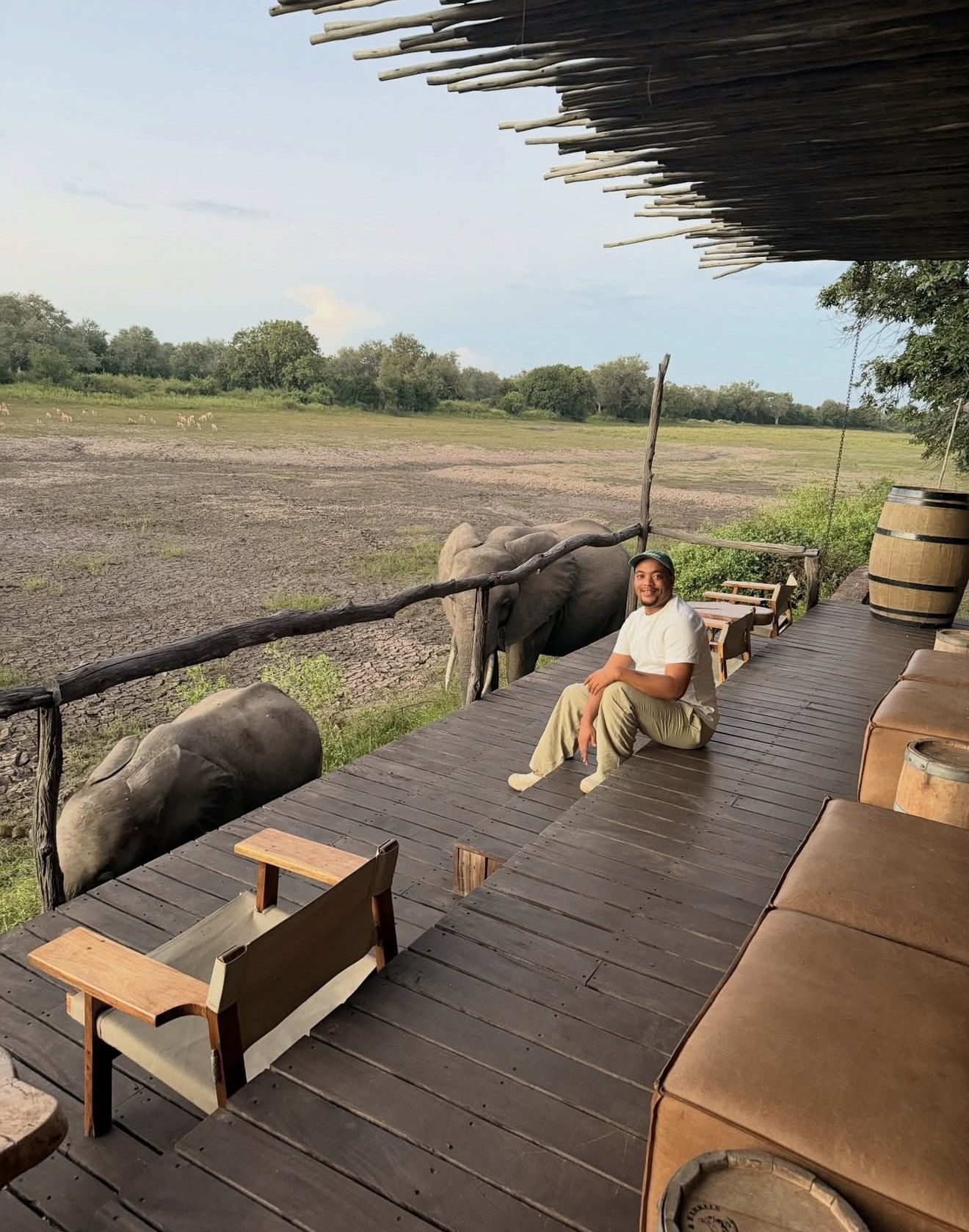
Zannon James inspecting a lodge
Rate information and updates
Published lodge-rate examples were checked on 11 October 2026. All prices are subject to availability, property terms and change. ZAR amounts remain in South African rand; USD amounts remain in US dollars, without an assumed exchange rate. General planning bands are estimates, and a tailored quote is needed for the complete journey. Review the dated 2026 examples before using them to budget for 2027 or later travel.
Frequently Asked Questions
How much does a luxury African safari cost per person?
A useful 2026 planning range for luxury safari accommodation is approximately USD 800 to USD 1,500 per person per night, while higher-end camps can range from USD 1,500 to more than USD 5,000 per person per night. Destination, season and property choice have a significant impact on rates.
Why are African safaris so expensive?
Safari lodges often operate in remote locations and include far more than accommodation. Rates may include meals, drinks, professional guides, safari vehicles, game drives, laundry, airstrip transfers and conservation-related costs. Remote logistics and low-density tourism also contribute to higher operating costs.
Is Botswana more expensive than South Africa?
Generally, yes, particularly at the luxury end. Botswana's low-volume safari model, remote camps and reliance on light-aircraft transfers can make it more expensive. South Africa has a much broader range of lodge categories and easier road and air access in many safari regions.
What is the cheapest time to go on safari?
This varies by destination. Green and shoulder seasons frequently offer lower rates, but wildlife conditions and weather also change. The cheapest month is not automatically the best month for your particular safari.
How many nights should I spend on safari?
For a first safari, approximately three to five nights in one wildlife area can work extremely well. Longer safaris can combine contrasting ecosystems or regions. Moving camps every two nights simply to see more properties is rarely necessary.
Are meals included on safari?
At most full-service safari lodges, meals are included. Many also include drinks, game drives and selected activities. Exact inclusions vary considerably and should always be confirmed.
Are flights included in safari lodge prices?
Usually not. Internal scheduled flights, charter flights and international flights are generally priced separately unless the itinerary or lodge package specifically states otherwise.
Should I book the cheapest safari lodge available?
Price should not be the only consideration. Wildlife location, guiding, vehicle density, camp size, season and logistics can have a greater impact on the safari than the room itself.