
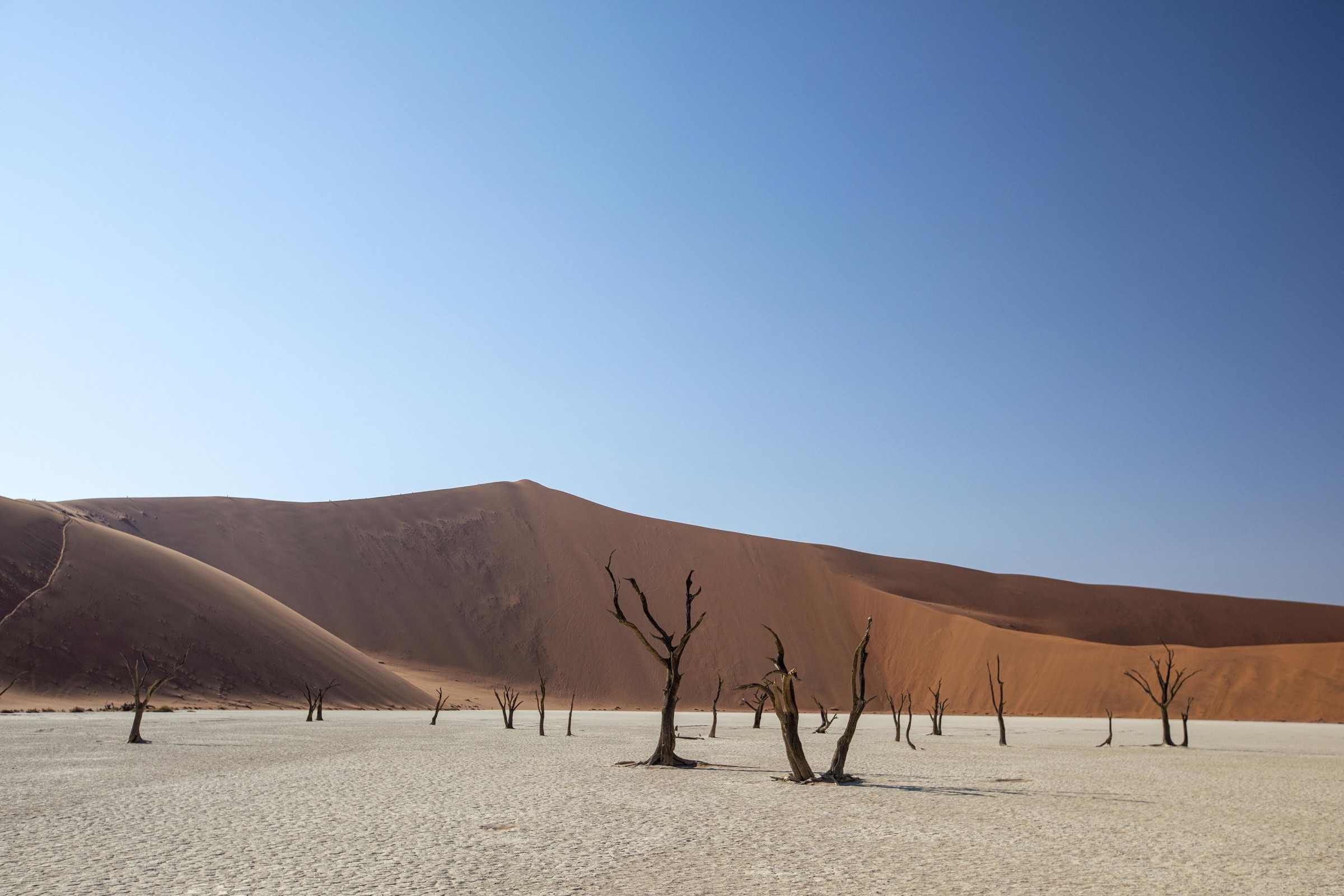
Dead trees on Deadvlei’s pale pan beneath red dunes and a blue sky in Namibia

Namibia

Namibia Luxury Safaris & Tailor-Made Journeys

Namibia rewards travellers who value space, landscape and extraordinary wildlife as much as traditional safari. From the towering dunes of Sossusvlei and the Atlantic edge of the Skeleton Coast to desert-adapted elephants, black rhino and Etosha’s waterholes, this is a country best experienced slowly and deliberately.

Written / reviewed by Zannon James, Founder and African Travel Specialist, Mason & Wild.

Professional itinerary planning, supplier knowledge and destination research.

Last reviewed:

Landscape is part of the safari

Why Namibia Feels Different
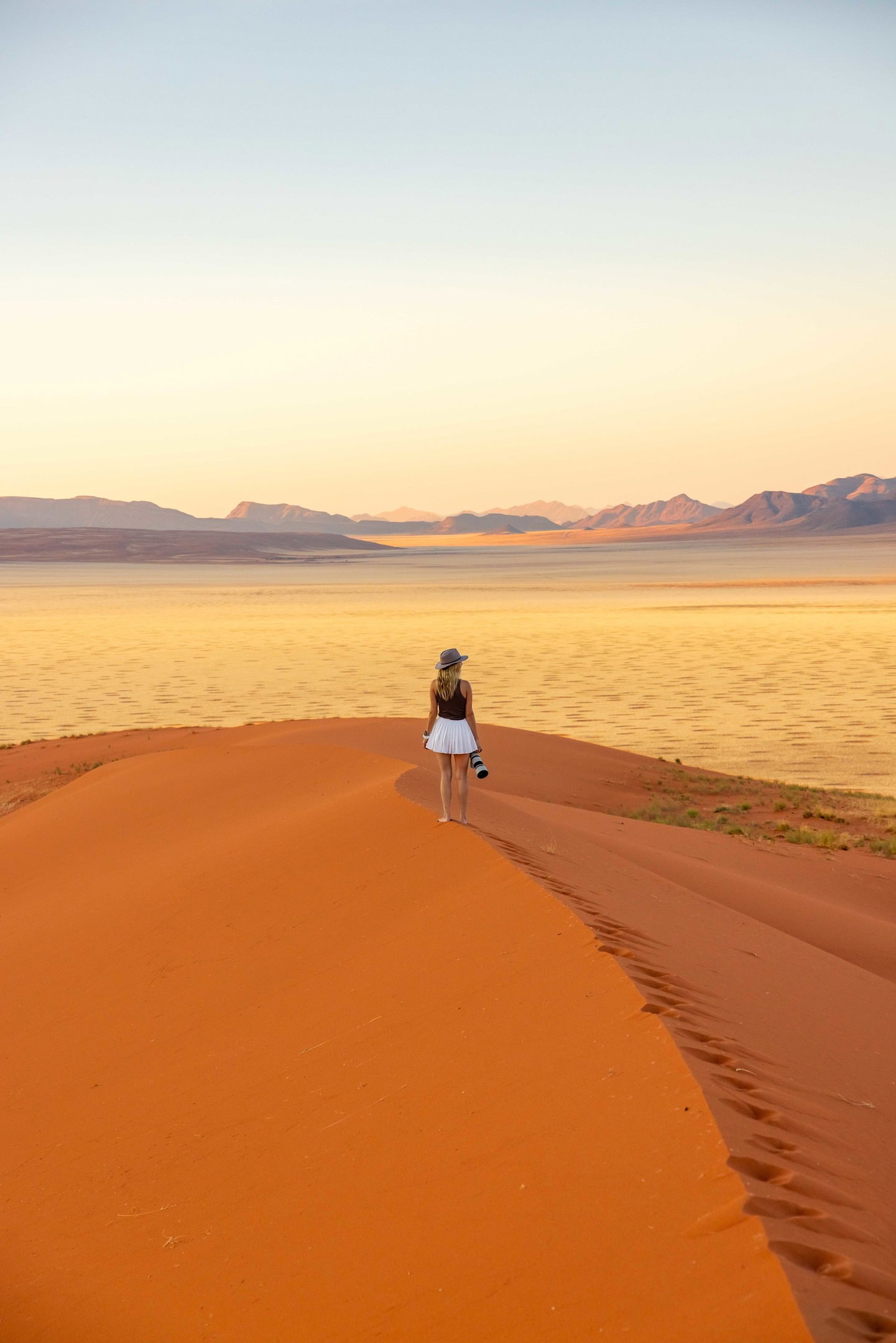
Namibia suits travellers who value landscape as much as wildlife. Its vast scale and low population density create journeys in which the country between lodges is part of the experience. Dunes, gravel plains, mountains, river valleys and the Atlantic coast ask you to look beyond the next sighting.

Compared with Botswana, Tanzania, Zambia or a South African private reserve, many Namibian areas have lower wildlife densities. Etosha can be highly productive, but the wider journey is often about finding animals across immense, arid landscapes. Desert-adapted wildlife and the relationships between water, people and land give those encounters their meaning.

Namibia also offers distinctive ways to travel. A carefully paced self-drive route brings independence and flexibility; a flying safari reduces long road transfers and opens up remote areas. Both can include striking architecture, small lodges, excellent guiding and dark skies. Choosing between them depends on your time and how you want to spend it.

This is a living African country, not an empty backdrop. Contemporary towns, pastoral livelihoods, locally connected tourism businesses and community conservancies belong within the story. The best Namibia luxury travel balances these realities with the space and privacy that draw many travellers here.

Traveller holding a camera on a red dune in Namibia
Namibia · Landscape at human scale

A practical destination reference

Namibia at a Glance

Best for
Landscape, photography, desert-adapted wildlife, conservation, architecture and slower travel
Core areas
Sossusvlei, NamibRand, Swakopmund, Skeleton Coast, Damaraland and Etosha
Useful length
10 to 14 nights, with more time for an extensive overland route
Travel style
Self-drive, private guided travel, flying safari or a hybrid
Season
Dry-season northern wildlife patterns differ from the desert and Atlantic coast

See how this destination fits your priorities in our first-safari destination guide.

Dunes, desert ecology and early light

Sossusvlei & the Namib
Sossusvlei and Deadvlei lie within the Namib desert landscape accessed through Sesriem. Red dunes, pale pans and the dark trunks at Deadvlei make this a rewarding photographic area. The most useful plan is usually an early start, before heat and visitor numbers build.

Accommodation location matters. Staying near Sesriem, within the relevant access arrangements, or farther away on a private reserve changes the morning’s logistics. We check gate access, transfer arrangements and the time needed to reach the dunes rather than assume that every desert lodge offers the same experience.

The Namib is more than dune climbing. Guided desert walks and drives reveal plants, insects and the strategies that allow life to persist in dry conditions. Scenic flights, where available and weather permits, show the relationship between dune fields, plains and the coast.

NamibRand Nature Reserve offers a different desert stay, with conservation-focused landscapes, guided activities and dark-sky experiences. Sossusvlei is the priority if seeing Deadvlei and the famous dune landscape is central to your trip; NamibRand can be valuable for quieter time in the desert. They can complement one another, but the route needs enough nights to justify both.

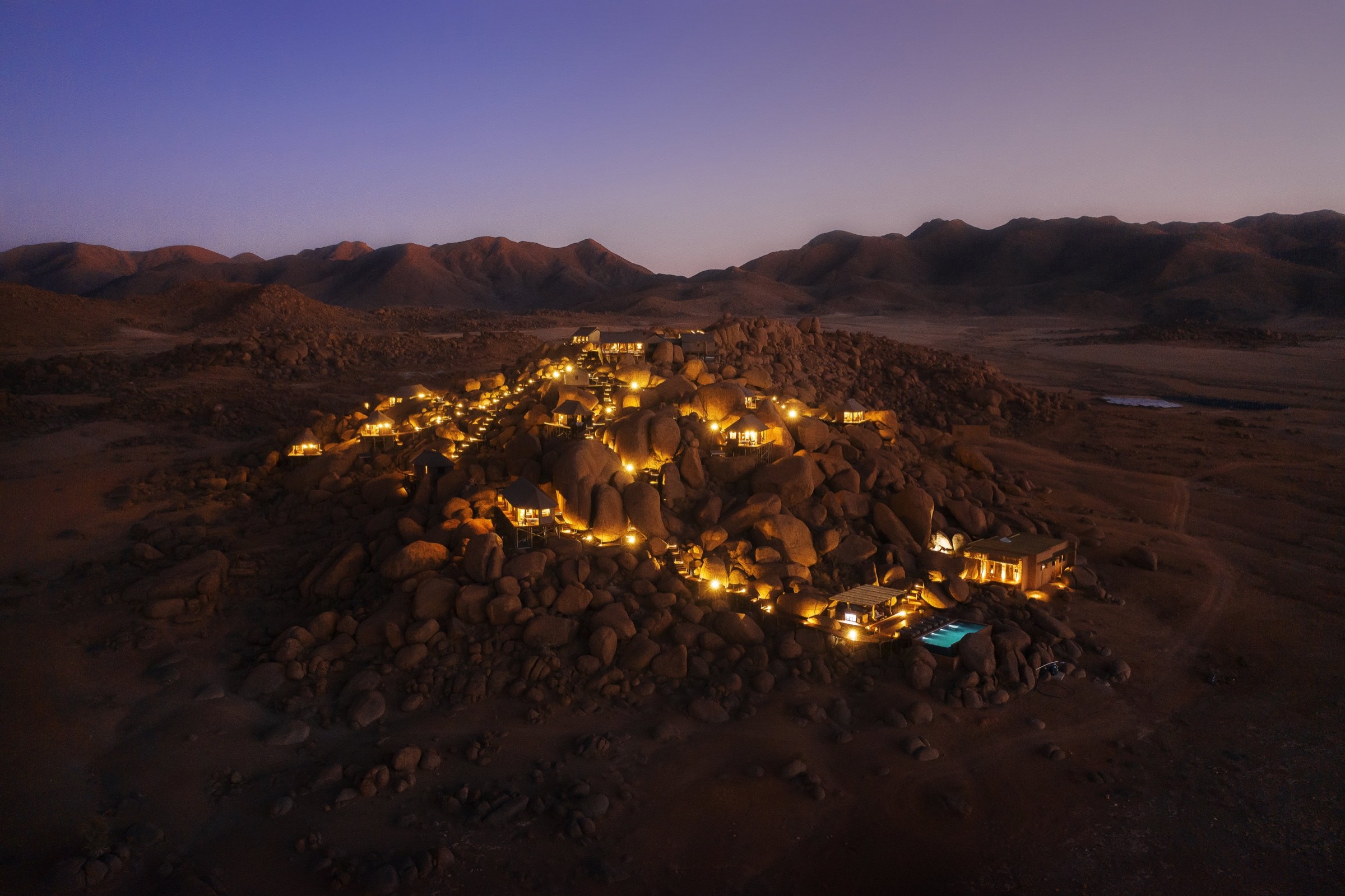
Illuminated desert lodge among rocky mountains in Namibia at dusk
Namib · Architecture within the landscape

A coastal change of pace

Swakopmund

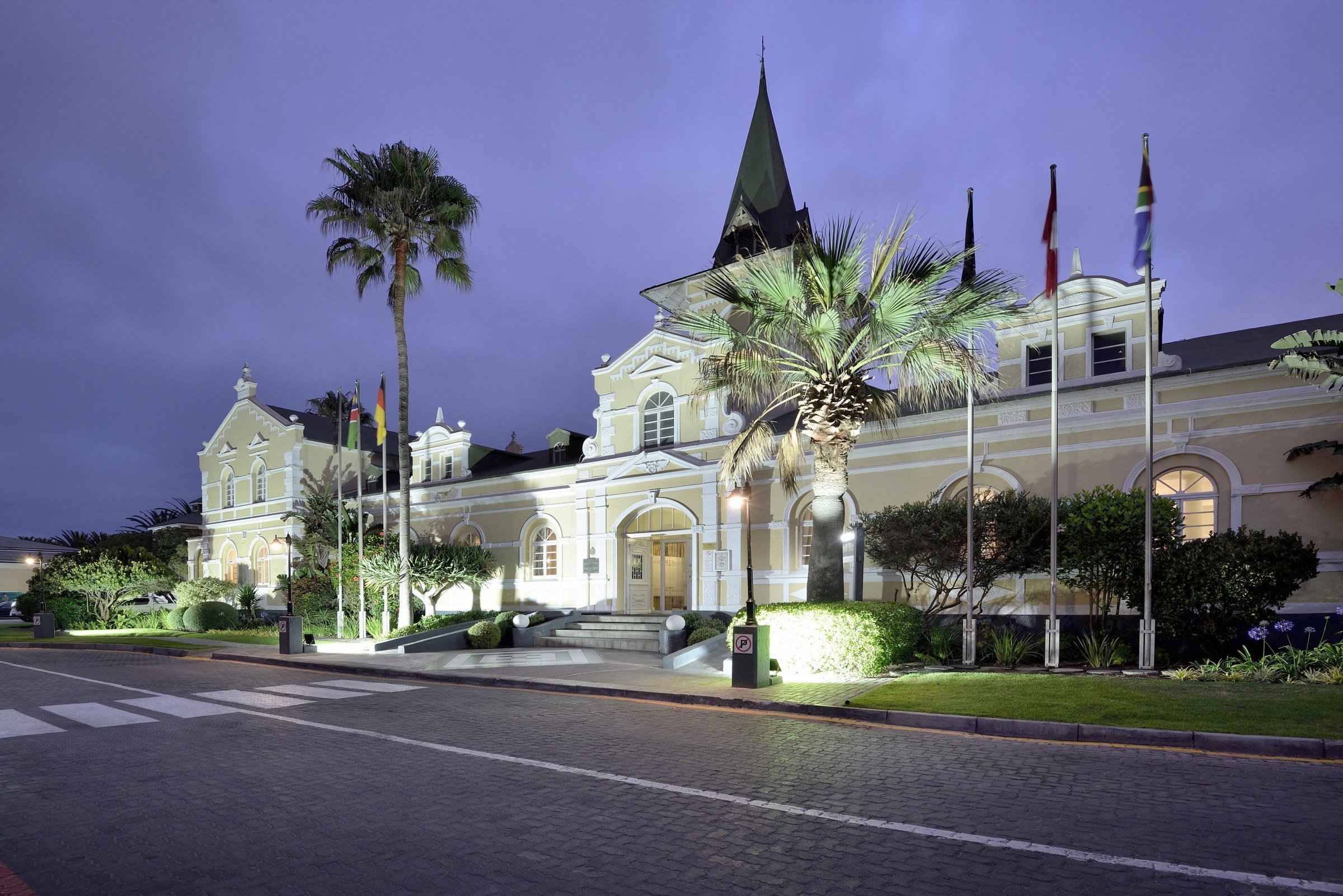
Swakopmund provides a useful reset between the Namib and northern Namibia. Restaurants, the seafront and a more settled town rhythm contrast with remote lodge stays. Its historic German colonial architecture is part of the town’s built environment, alongside contemporary Namibian life and businesses.

It is a base for adventure activities and guided excursions towards Sandwich Harbour, where dunes meet the Atlantic. These outings require appropriate operators and conditions. Weather, tides and your interests should shape the programme, rather than an assumption that every coastal activity will operate on demand.

Two nights often work well within a luxury itinerary, providing a full day without consuming too much time from other regions. Travellers planning several activities may prefer longer. The coast can be cool and foggy even when inland temperatures are high, so pack a layer and allow for weather changes.

Historic building and palm trees illuminated at dusk in Swakopmund
Swakopmund · A coastal change of pace

The Atlantic edge of the desert

The Skeleton Coast
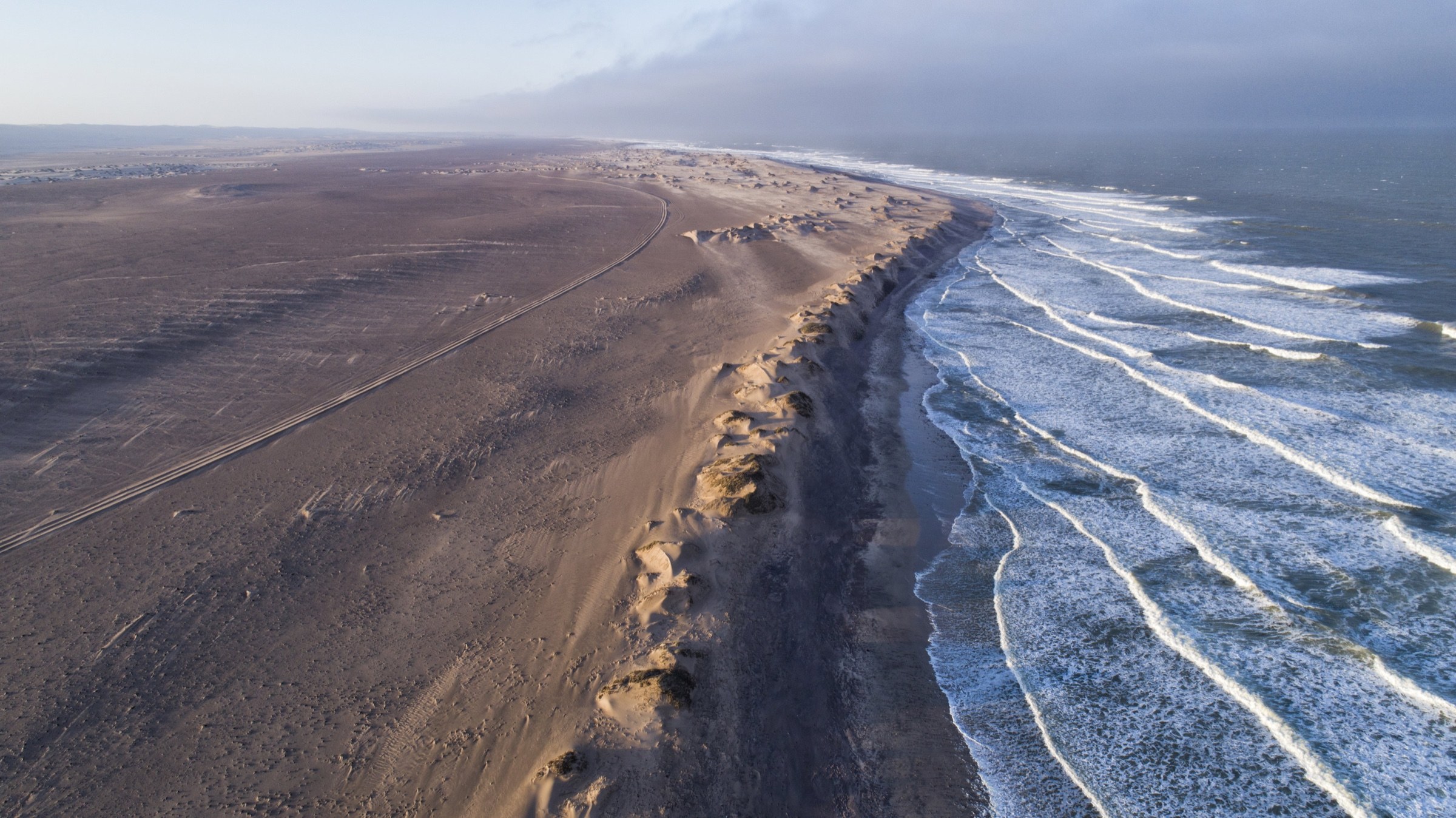
The Skeleton Coast is primarily a landscape and remoteness experience. Desert, ocean, fog and the history of shipwrecks create a different atmosphere from the interior. It should not be sold as another high-density game-viewing region.

Remote lodges and specialist guided journeys can provide access to places that are impractical to include casually in a road trip. Scenic flights show the scale of the coastline and the meeting of sand and Atlantic water. Seal colonies can be part of appropriate coastal routes, but the exact programme depends on where you travel and how you get there.

Swakopmund and the remote northern Skeleton Coast are not interchangeable experiences. A short coastal stop will not deliver the isolation of a specialised stay farther north. Flying can be particularly valuable here, provided weather, landing arrangements and the itinerary’s connections align.

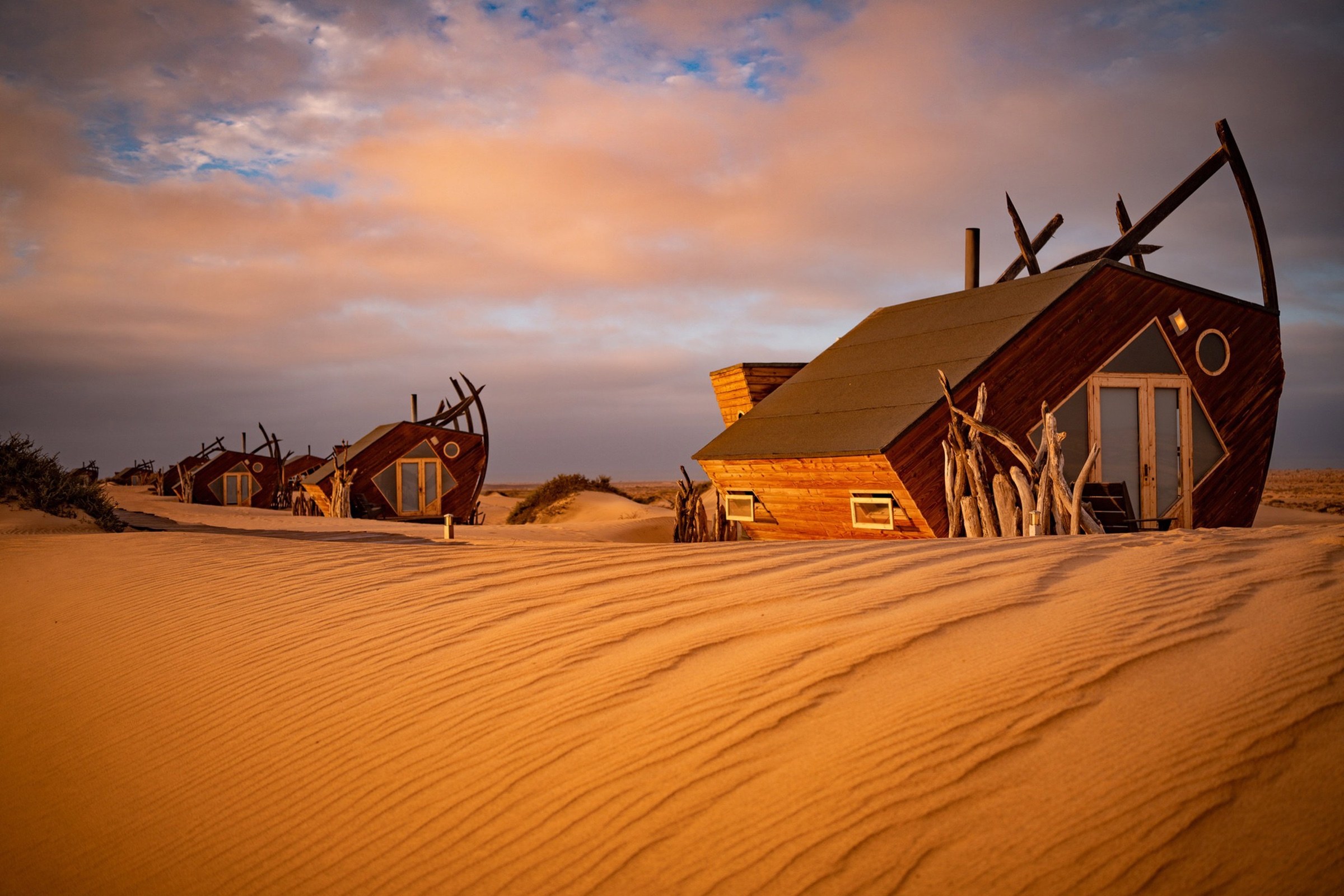
Ship-inspired wooden lodge buildings among dunes on Namibia’s Skeleton Coast
Skeleton Coast · Remote architecture
Aerial view of Namibia’s desert coastline meeting the Atlantic Ocean
Skeleton Coast · Desert and Atlantic

Water, movement and arid-land survival

Damaraland & Desert-Adapted Elephants
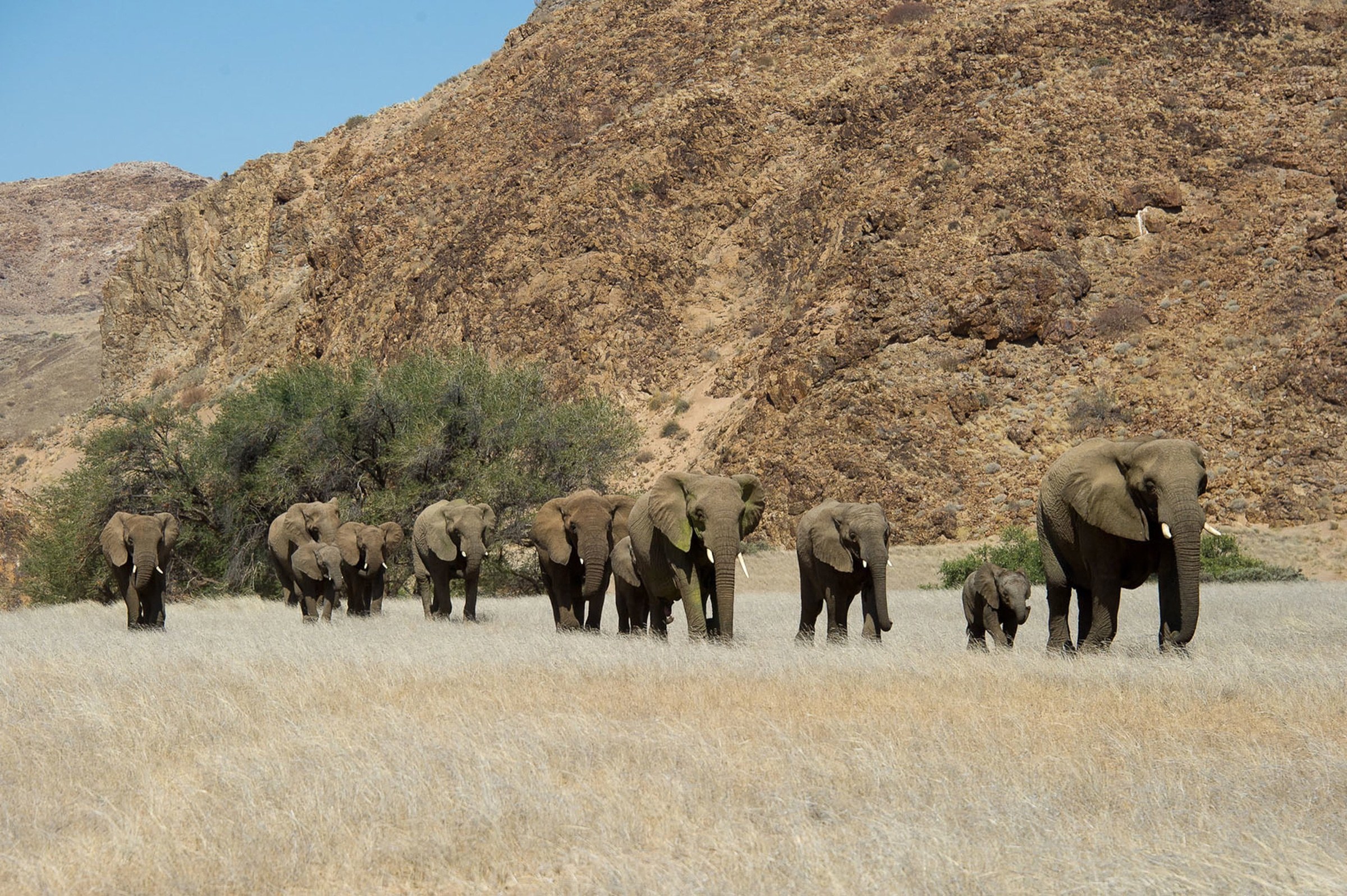
Damaraland and the wider Kunene landscapes combine rocky terrain, open plains and ephemeral river systems. These rivers may look dry at the surface, yet their vegetation and remaining water sources help shape the movements of wildlife and people.

Desert-adapted elephants are African savanna elephants, not a separate elephant species or subspecies. Their adaptation to arid conditions is particularly associated with learned behaviour, including knowledge of water and feeding areas and movement across large distances. The term describes how they live, rather than a different animal.

Tracking them requires patience and local knowledge. Wildlife densities are lower than in many conventional reserves, and an outing may cover considerable ground. Sightings can feel more earned, but are never guaranteed. We allow time for the landscape and guide’s interpretation as well as the possibility of elephants.

Community conservancies are important to how tourism and conservation operate in this region. Local participation, livelihood concerns and the costs of living alongside wildlife matter. A good Damaraland safari considers the particular conservancy and operator rather than treating conservation as a uniform national product.

Elephant family walking beneath rocky slopes in Damaraland
Damaraland · Desert-adapted elephants

Protecting wildlife across shared landscapes

Black Rhino & Conservation
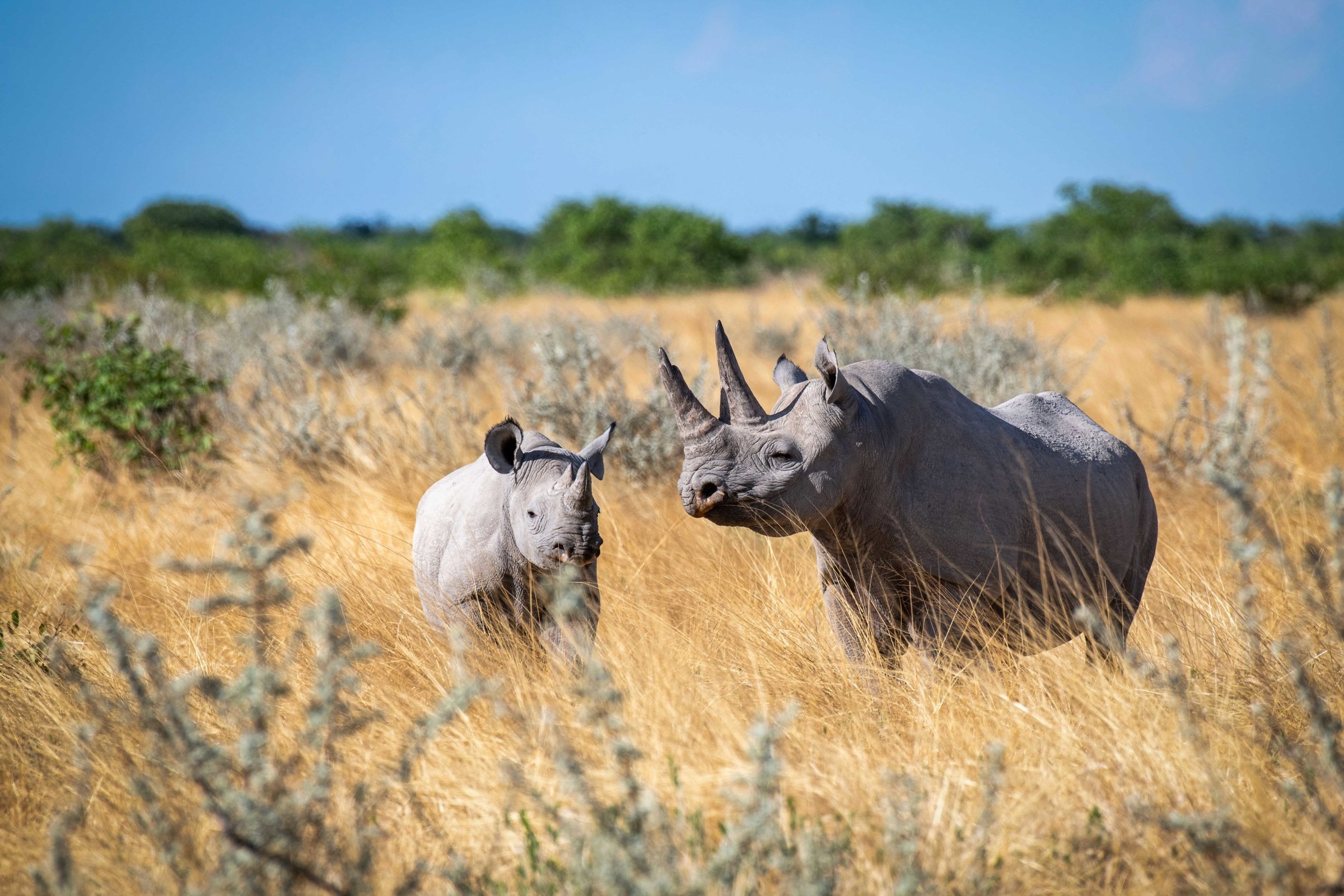
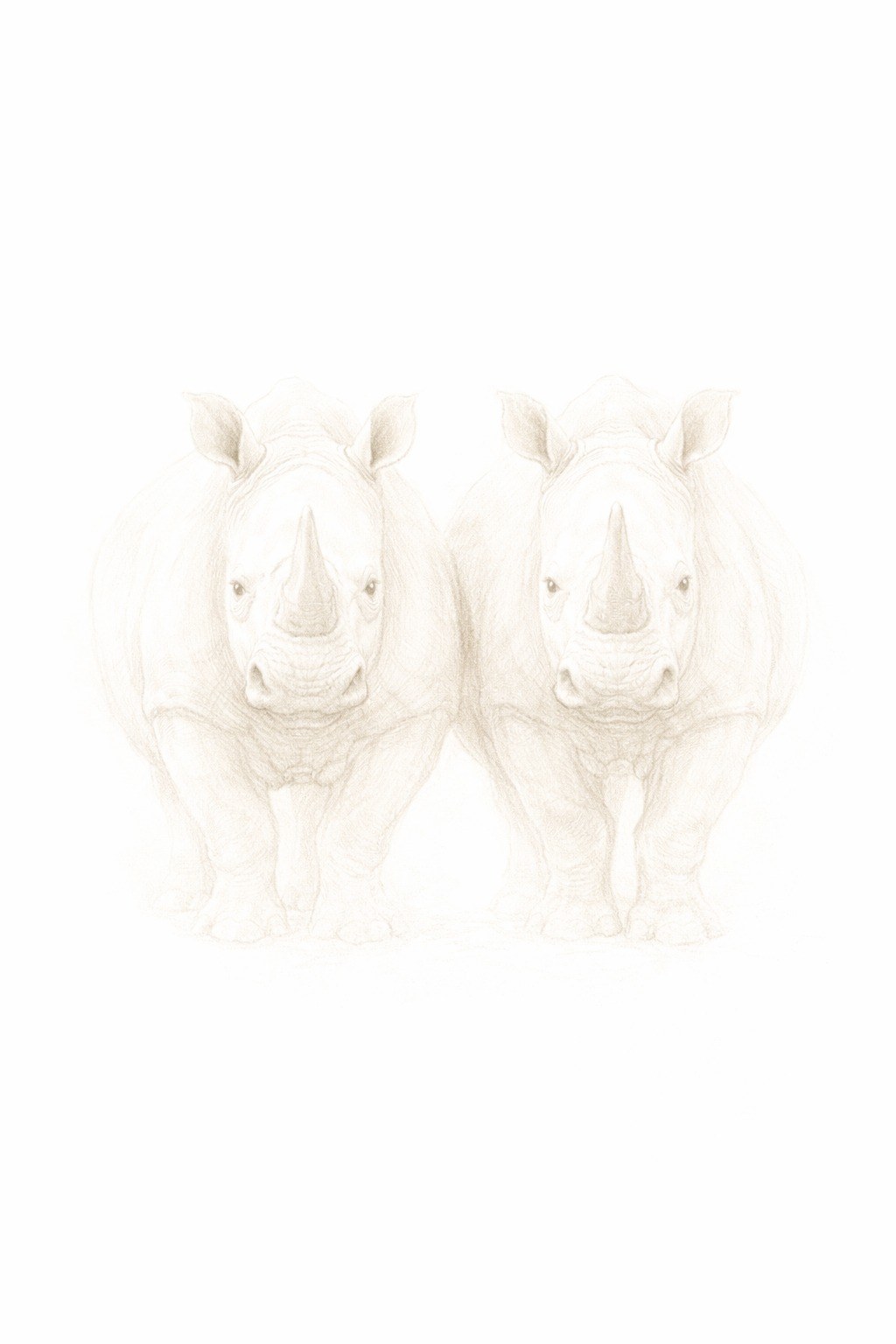
Namibia’s north-west supports free-ranging black rhino within a landscape shared with local communities. Protecting these animals depends on monitoring, skilled trackers, government and conservation partnerships, and the people who live closest to them.

Save the Rhino Trust’s work includes monitoring and research in the Kunene region. Conservancy-based tourism can contribute to the economic value of keeping wildlife in these landscapes, but success is not permanent or uniform. Poaching, disturbance and the practical demands of monitoring remain concerns.

Rhino tracking on foot is offered in selected settings with specialist teams. Suitability depends on terrain, conditions, fitness and the operator’s protocol. The aim is a responsible observation, not the closest possible approach. Instructions, distance and the animal’s behaviour take priority over a photograph.

We do not publish rhino locations, promise a sighting or attach unsupported population figures to a trip. Etosha and certain private reserves provide other rhino-viewing contexts. Each has a different access and conservation model, which should be understood before choosing the experience.

Adult black rhino and calf standing in golden grass in Namibia
Namibia · Black rhino

Living communities, shared on their terms

Himba Culture & Community
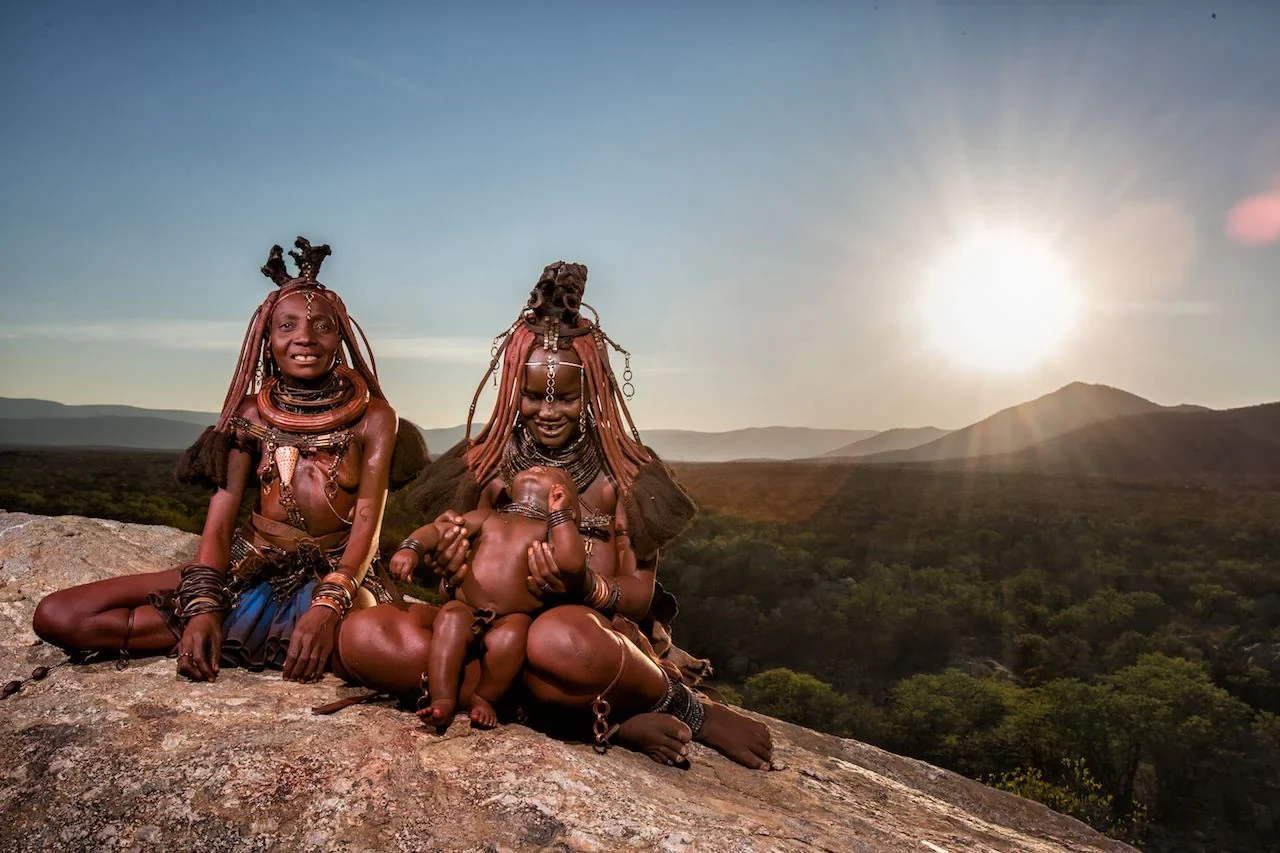
Himba communities are contemporary communities with cultural identities and traditions that continue to evolve. Pastoral livelihoods, family relationships and changing economic conditions are part of daily life. A visitor should not approach a community as though it exists outside the present.

Where a visit is appropriate, we look for community-led arrangements with willing hosts, clear consent and a meaningful local economic relationship. Ask before photographing people, respect a decision not to participate and follow the host’s guidance about what is private.

We avoid intrusive visits and interactions staged purely to meet a visitor’s expectations. An experience should offer context and conversation while respecting people’s time and choices. The important question is how the community wishes to share its culture, not how closely a visit resembles an outsider’s idea of it.

Two Himba women, one holding a child, seated on rocks in a mountain landscape
Himba communities · Culture shared with care

Wildlife organised around water

Etosha National Park
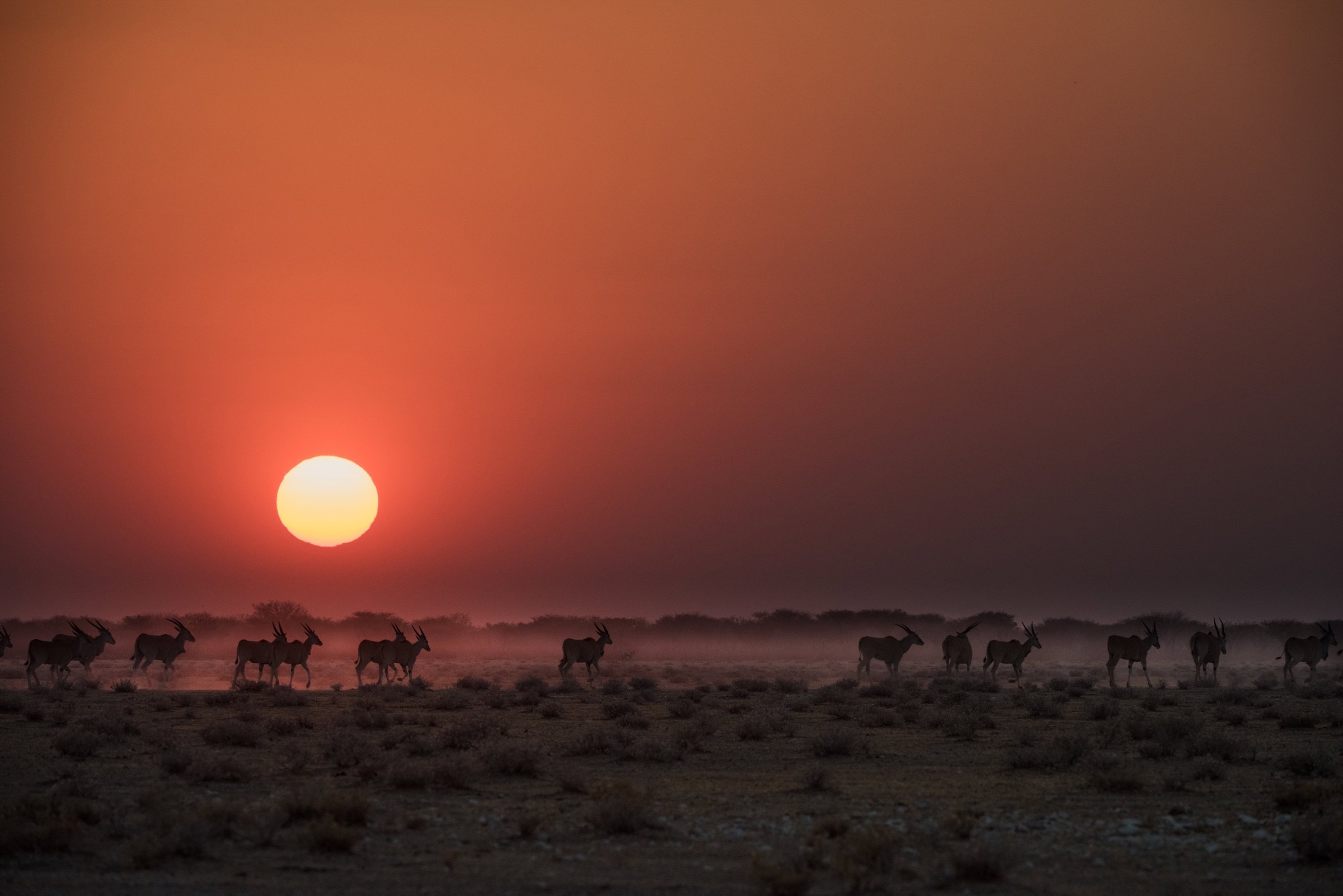
Etosha is Namibia’s principal classic wildlife destination. The Etosha Pan shapes the park’s landscape, while waterholes provide a practical focus for game viewing, especially in dry conditions. Time spent watching one waterhole can be as productive as covering more road.

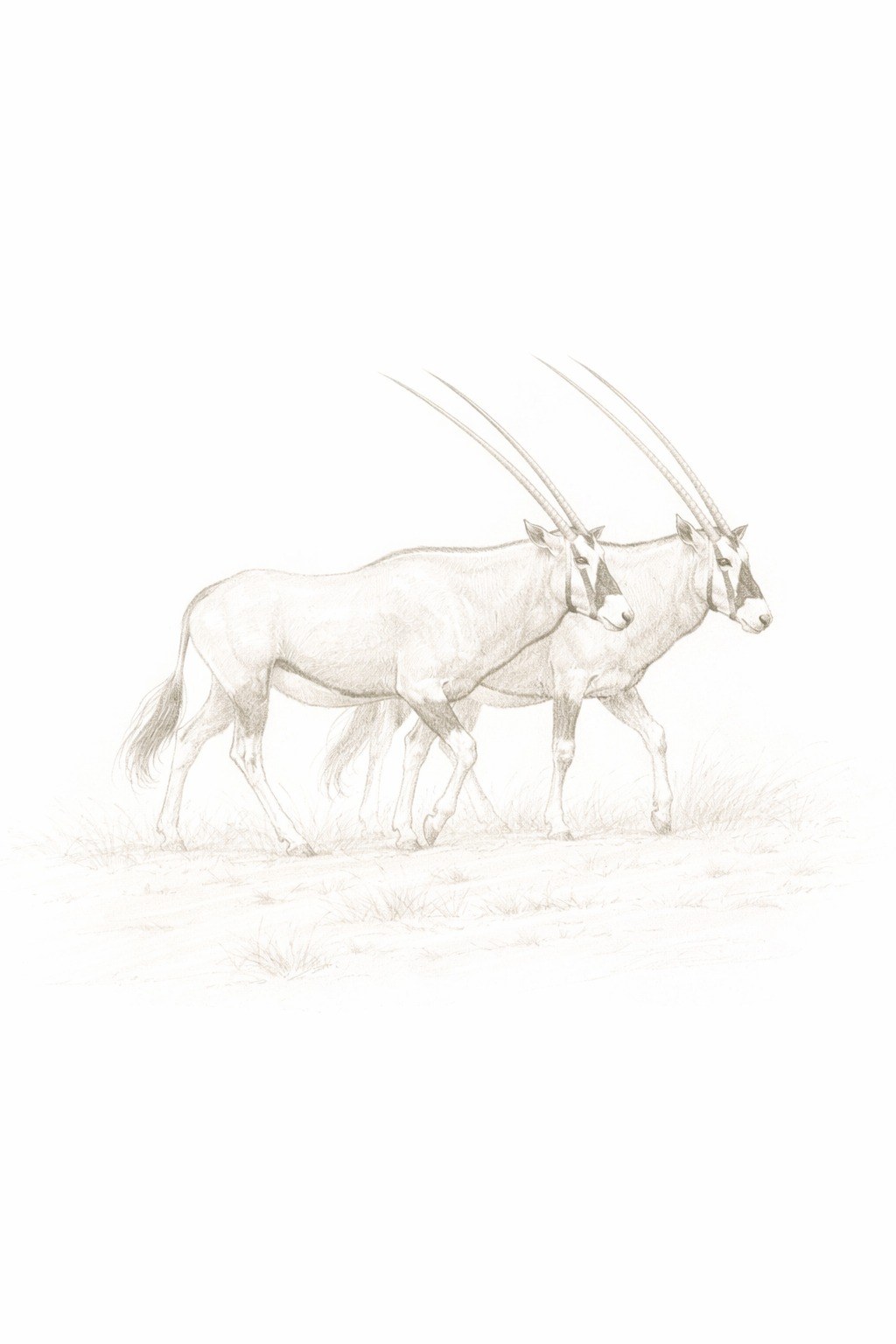
Elephants, lions, black rhino, giraffe, zebra, springbok and oryx are among the wildlife associated with the park. Movements vary with rainfall, water availability and habitat. A species being present does not mean it will appear at every waterhole or during every stay.

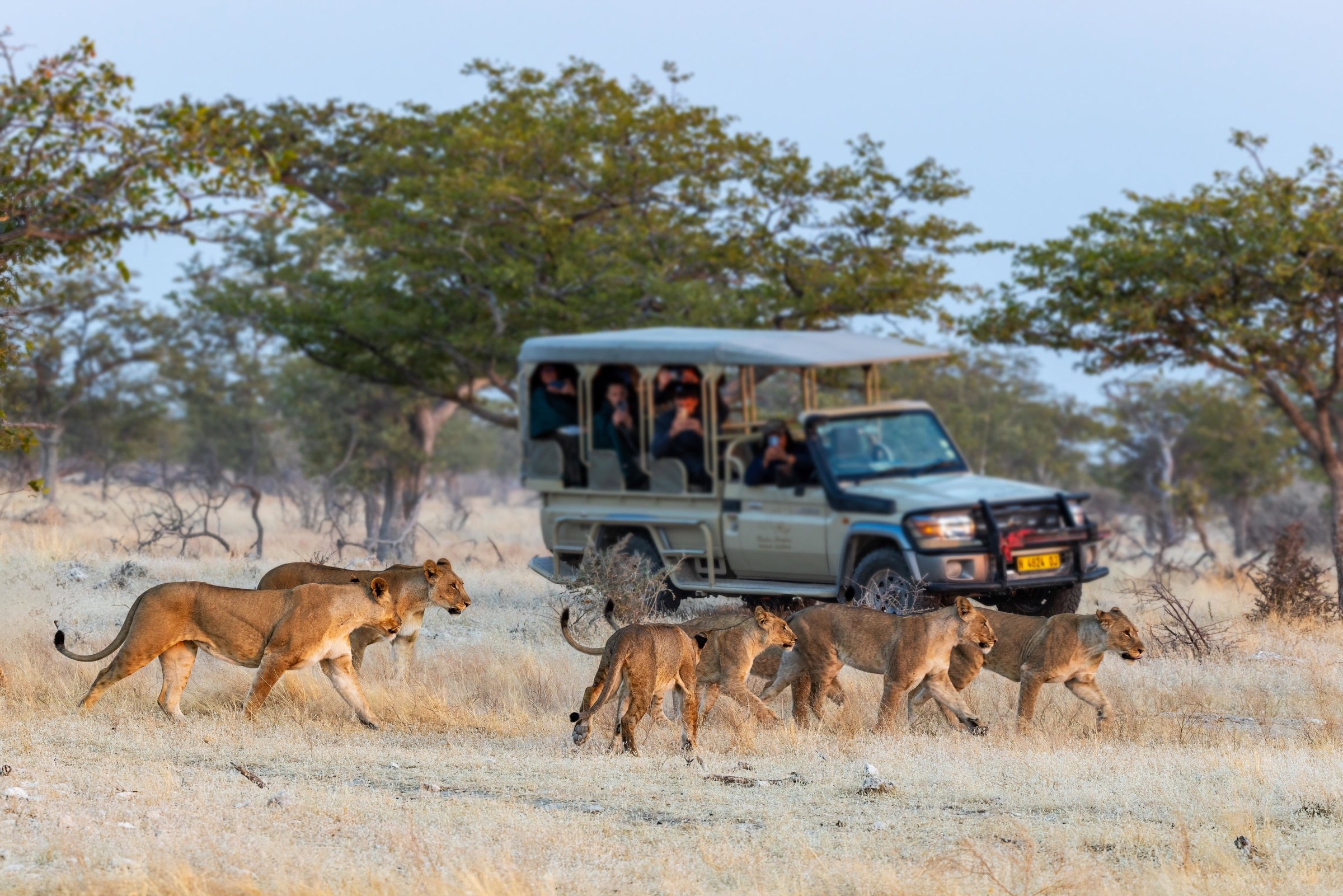
The safari style differs from a private concession in Botswana or a South African private reserve. Etosha has road networks and public-access areas used by self-drivers and guided vehicles. You should expect to remain on designated roads and observe park rules, rather than assume exclusive off-road tracking.

Choosing the side of the park, the accommodation and the time available matters. Lodge transfers and gate access influence how much of each day can be spent watching wildlife. Adjacent private reserves may offer their own activities under different rules; those should not be confused with access inside the national park.

Oryx moving across dusty plains at sunset in Etosha
Etosha · Changing light

Give the waterholes time

An Etosha Safari in Practice
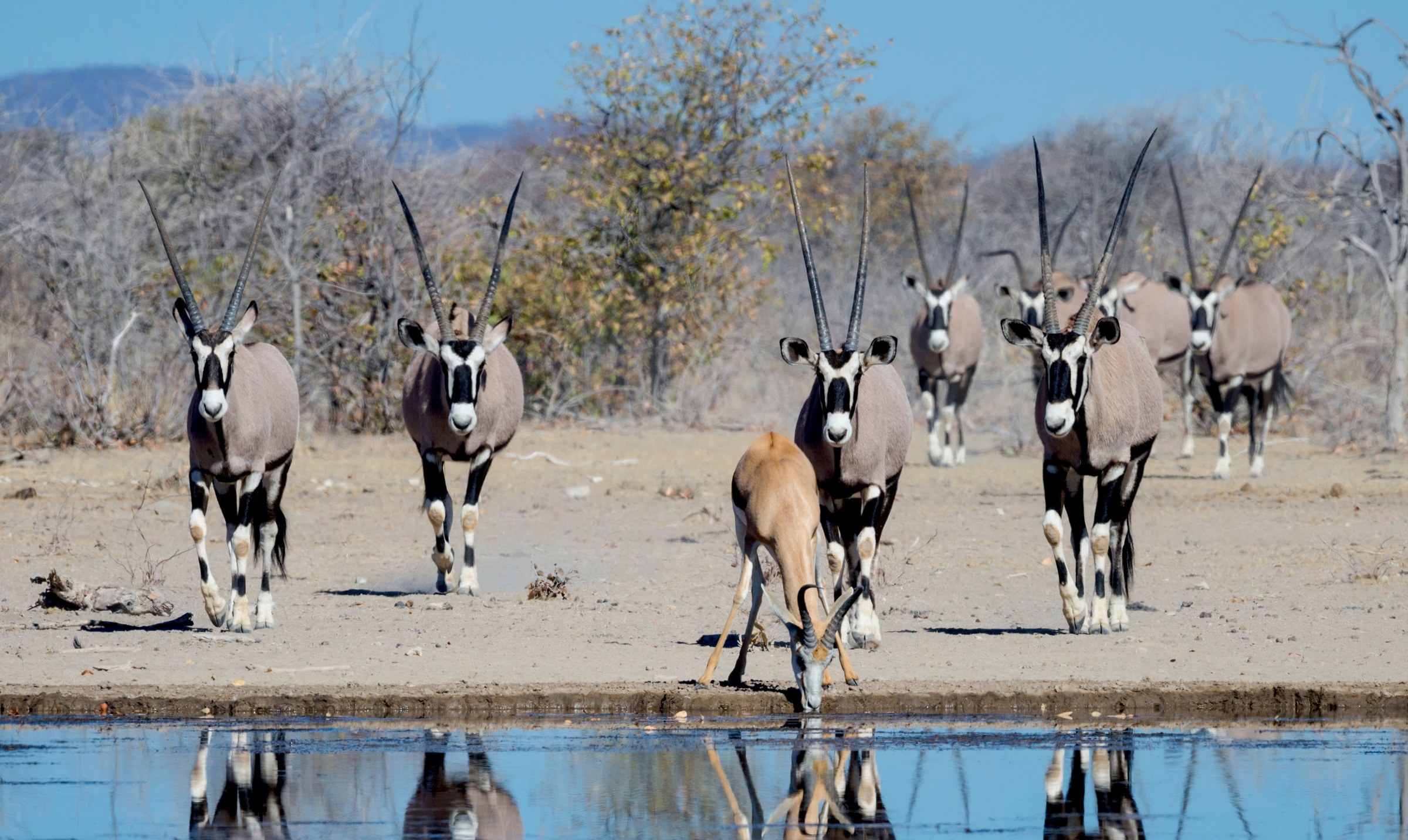
A well-paced Etosha safari combines patient waterhole watching with drives between different habitats. Early and late light can reward photographers, while the dry season often draws animals towards dependable water. Waiting allows behaviour and interactions to develop.

A private guide adds interpretation and helps read current conditions, but does not make the public park exclusive. If privacy, off-road access or a particular activity is essential, we discuss the appropriate private setting and its actual inclusions alongside Etosha.

Oryx and springbok gathered at an Etosha waterhole
Etosha · Time beside water
Lions passing an open safari vehicle in Etosha
Etosha · Wildlife and the public park

Adaptation rather than density alone

Namibia’s Wildlife Beyond Etosha

Namibia’s wildlife story extends beyond a conventional safari reserve. Desert-adapted elephants and free-ranging black rhino in the north-west, oryx and springbok in arid plains, and Hartmann’s mountain zebra in rocky country illustrate how habitat shapes the journey.

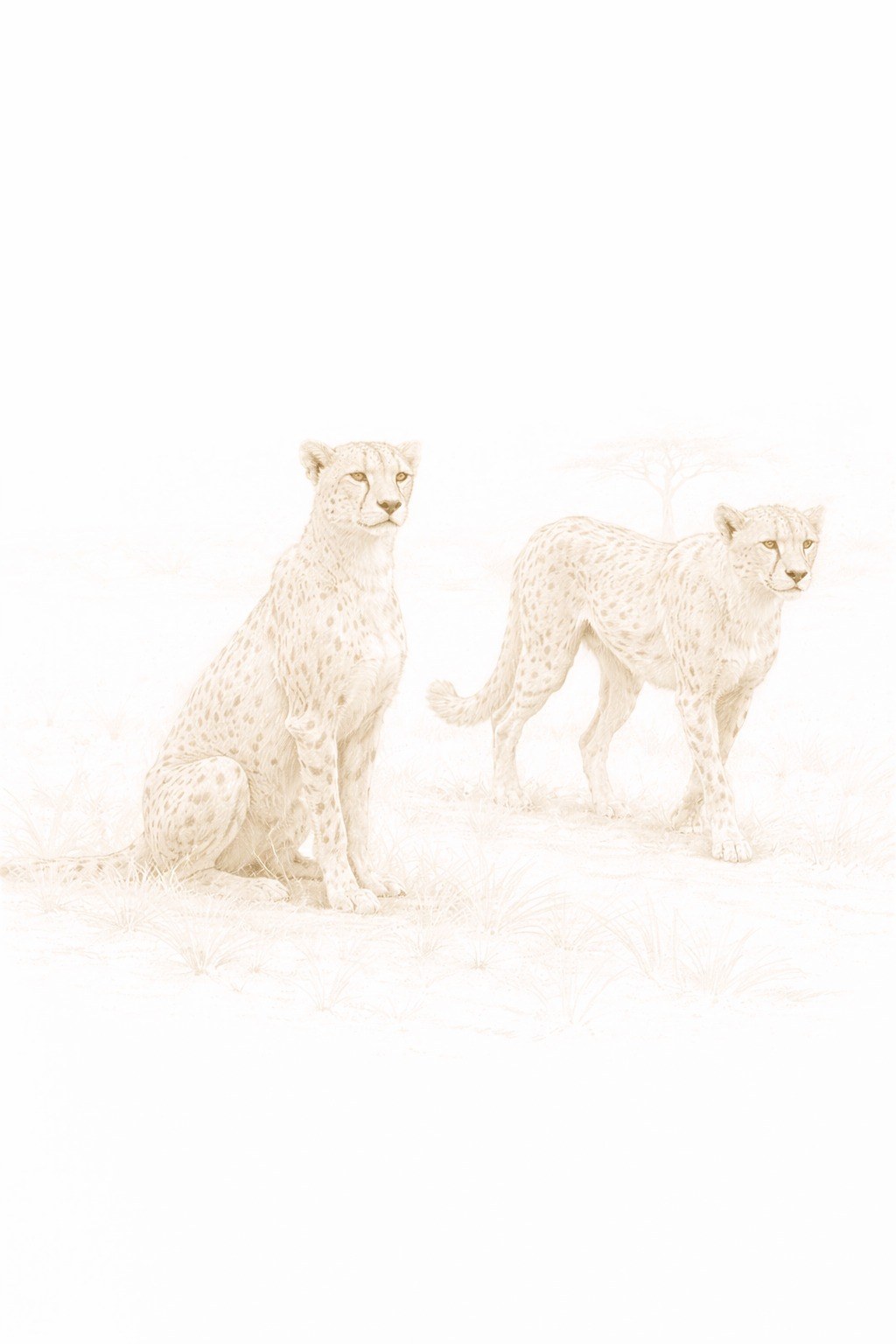
Lions, cheetahs, brown hyenas, giraffes, elephants and other plains game occur in different parts of the country. Their distribution and visibility differ considerably. We choose areas around your interests rather than suggest that every region offers the same species or density.

Along the Atlantic coast, marine wildlife adds another dimension, with seals and birdlife on suitable excursions. In many inland areas the appeal lies in finding wildlife within a large, dry landscape. If you want frequent dense concentrations of animals every day, Namibia may work best alongside a more conventional wildlife destination.

Access, space and location

Private Lodges & Luxury Experiences
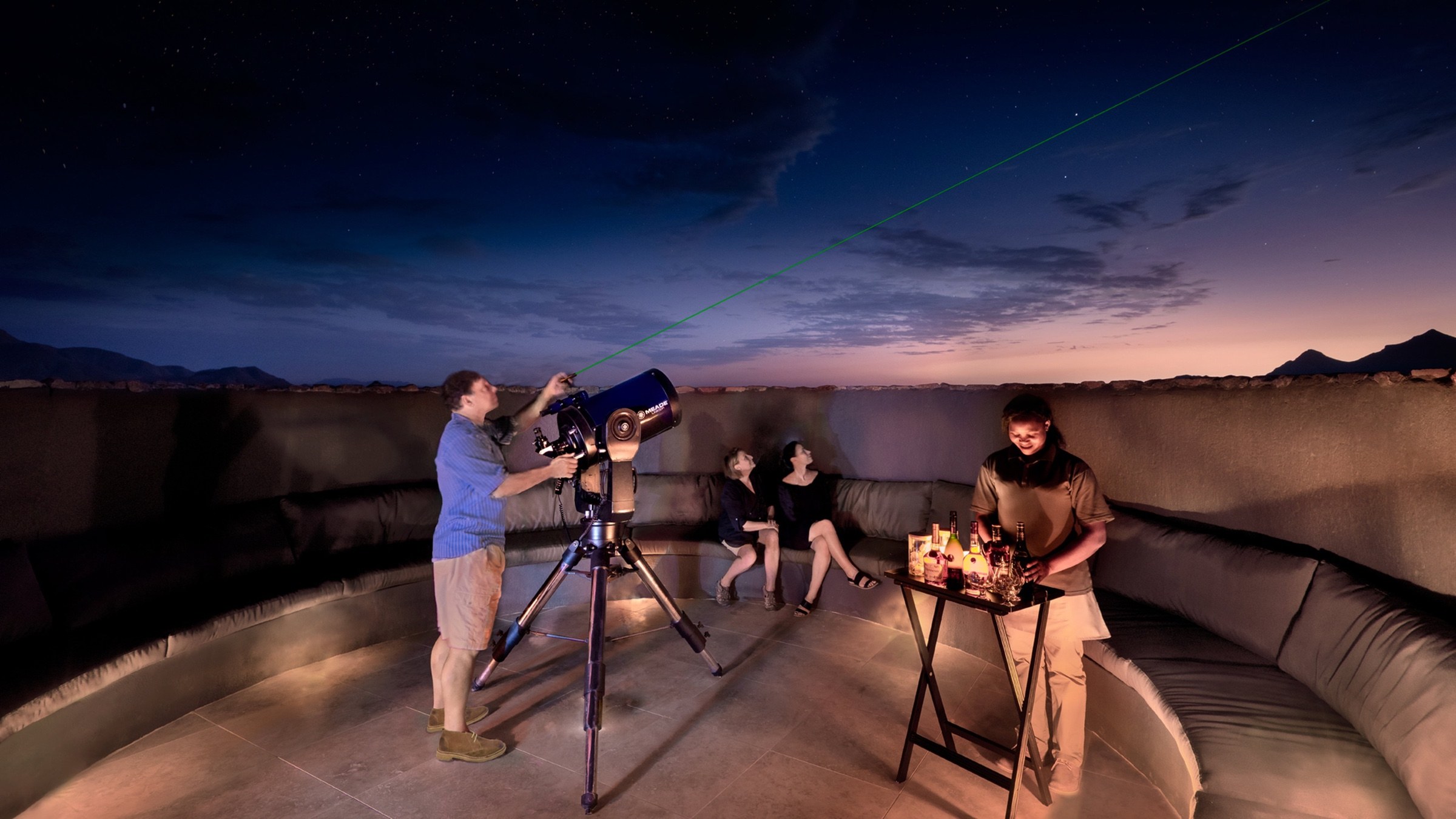
Luxury in Namibia is often a matter of access, privacy and time. A small lodge in the right location can offer quiet mornings, considered guiding and an understanding of the surrounding landscape that no list of facilities can replace.

Architecture inspired by rock, dunes and open plains can make a stay part of the setting. Astronomy programmes and dark skies, private guiding, scenic flights, desert dining and photographic activities may be available at selected properties. We check the actual programme and inclusions rather than assume every luxury lodge offers all of them.

Slower travel gives these experiences room. A lodge chosen only for its reputation may be wrong for your route, while an extra night in a less familiar setting may give you the privacy or guiding you value most. Namibia luxury holidays work best when accommodation and itinerary design are considered together.

Guests stargazing with a telescope at a Namibian lodge
Namibia · Dark skies and considered hosting

Choose how the journey should feel

Self-Drive, Fly-In or Both?

A Namibia self-drive safari and a Namibia fly-in safari can visit similar regions yet feel very different. Driving offers independence and a continuous reading of the country. Flying reduces time on the road and can make remote stays possible within a shorter itinerary.

Hybrid journeys often work particularly well. You might drive a manageable part of the route, then fly to a remote lodge or return to Windhoek by air. A privately guided road journey offers another option for travellers who want the overland experience without doing the driving.

Self-drive

Best for independent travellers, longer trips and those comfortable with long distances. It offers flexibility and can provide good value within a carefully selected luxury route.

Main tar roads and gravel routes require different driving habits. Road condition matters more than a distance estimate alone. Keep speeds appropriate to the surface, avoid driving outside towns after dark and leave time for stops.

Plan fuel and water before remote stretches. Choose a suitable vehicle, check tyre condition, spare tyres and the rental company’s recovery arrangements, and understand the insurance cover. Use offline navigation alongside current local route advice.

Fly-in

Best for shorter itineraries, remote areas and travellers prioritising time and comfort. The Skeleton Coast is a particularly useful example of where air access can change what a route makes possible.

Light-aircraft transfers reduce road time and can offer a scenic understanding of the country. Flights remain subject to weather, airstrip access and the operator’s arrangements. They are not simply interchangeable with road transfers.

Baggage limits, soft-sided bag requirements and space are important. Confirm allowances and any restrictions before packing. We consider comfort with small aircraft alongside schedule, lodge access and budget.

Different regions, different conditions

The Best Time to Visit Namibia

May to October is broadly the dry season across much of the country and a popular travel period. Cooler conditions and wildlife concentrating around water can suit a first Namibia safari. These patterns are particularly relevant to northern wildlife areas, not a guarantee of identical weather everywhere.

June to August can bring cold desert mornings and nights. Warm layers matter even when afternoons are sunny. Demand is high for many lodges, so route flexibility and early planning are useful.

September to October becomes hotter, while water remains an important focus for wildlife. Early starts and time to rest become more valuable. We consider heat tolerance alongside any walks and longer road days.

November to April brings summer heat, thunderstorms and greener landscapes in some regions. Dramatic skies and quieter periods can reward photographers, but wildlife patterns and road conditions change. Rainfall is variable, so a greener season is not an assured visual effect.

The Namib and Atlantic coast behave differently from northern safari areas. Coastal fog and cooler air can contrast sharply with the interior, and the desert may remain dry while northern regions receive rain. We plan clothing, activities and travel style around the whole route.

Distance needs time

How Long to Spend in Namibia

Seven nights can deliver selected highlights, but a multi-region road itinerary at that length is usually rushed. A focused flying route or fewer destinations is more sensible than trying to cover the full country.

Ten nights can make a strong first journey with careful pacing. Twelve to fourteen nights gives more room to connect desert, coast, Damaraland and Etosha, although the exact route and lodge locations still determine the travel burden.

Fourteen nights or more is particularly valuable for an overland journey that includes remote areas or additional time within each region. Namibia rewards slower travel because the distances are large. Choose the number of stops around your available time, rather than use every day as a transfer day.

Starting points, not fixed packages

Three Namibia Routing Concepts

Classic Namibia, around 10 to 12 nights: Windhoek, Sossusvlei, Swakopmund, Damaraland and Etosha. A useful first route when driving distances are carefully paced. At the shorter end, consider fewer stops or a flight to avoid consecutive long road days.

Luxury Flying Namibia, around 8 to 10 nights: Windhoek, NamibRand or Sossusvlei, Skeleton Coast, Damaraland, then Etosha or a private reserve. Flight connections, airstrip access, baggage limits and the number of nights in each place shape what is practical.

Namibia in Depth, around 14 nights: Windhoek, the Namib Desert, Swakopmund, a thoughtfully chosen Skeleton Coast stay, Damaraland and Etosha. A remote coastal extension may call for a hybrid or flying element. Add an optional extension only when there is enough time to enjoy it.

Each Namibia safari itinerary is custom-designed. These concepts do not specify hotels, prices or guaranteed flight services. We adjust the sequence and number of regions to your travel dates, interests and preferred rhythm.

Contrast with a reason

Combining Namibia with Other Destinations

Namibia + Cape Town brings desert and wildlife together with a city, food, wine and a different hospitality setting. Regional air connections can make this a coherent beginning or ending, but operating days and total transfer time must be checked.

Namibia + Botswana offers a strong landscape contrast. Arid wilderness and dunes can be followed by a more concentrated wildlife programme in a suitable Botswana area. The connection should leave enough time in both countries rather than turn the second destination into a brief add-on.

Namibia + Victoria Falls adds a major natural landmark to a desert and safari journey. Choose the Falls experience around water levels and the most practical arrival side, then check the actual regional routing.

Namibia + South Africa can support a broader itinerary with private-reserve safari, Winelands or other regions beyond Cape Town. The purpose is to add something different, not simply another country. We assess flights, entry requirements and the time needed for every combination.

Design around the traveller, not assumptions

LGBTQ+ Travel in Namibia

Namibia is socially more conservative than South Africa, particularly outside established tourism settings. Public displays of affection may attract unwanted attention. A well-designed journey can provide comfortable professional hosting, but a quality lodge is not a guarantee about every interaction or the wider environment.

Legal summaries require care. In June 2024, Namibia’s High Court ruled the common-law offences criminalising consensual same-sex intimacy unconstitutional and invalid. Government travel advice does not always reflect legal developments consistently. We recheck current law, court developments and official advice before departure rather than treating an older summary as definitive.

We discuss accommodation, room arrangements, private guiding and the local context with trusted partners. We also listen to what comfort and openness mean to you. Discretion may be appropriate in some public settings; the decision should be informed by context rather than imposed through assumptions about LGBTQ+ travellers.

Namibia should not be presented as equivalent to Cape Town’s openly LGBTQ+ travel environment. We brief you honestly and discuss alternatives if the context does not suit your expectations. We cannot promise safety or remove the need for current advice.

Read our LGBTQ+ travel intelligence for Africa

Explore South Africa’s travel context

Legal and travel context reviewed 11 October 2026. Compare the 2024 judgment and legal case account with current government travel advice, which retains a different description of certain sexual acts. We verify developments for each journey.

For the wider destination context, read our LGBTQ+ Africa travel guide.

Match the destination to your interests

Who Namibia Is Best For

Namibia is particularly strong for travellers drawn to landscape, photography, wildlife adaptation, conservation, architecture, road trips, astronomy and private remote lodges. It suits people willing to give a place time and to see the landscape between sightings as part of the safari.

Travellers seeking maximum wildlife density every day may prefer Botswana, South Luangwa, the Serengeti or a South African private reserve. Those who dislike long drives can consider flying, but short flights still involve small aircraft, luggage limits and remote operating conditions.

If independent driving is not appealing, a private guide or hybrid route may solve the problem. If the priority is a compact, consistently dense wildlife itinerary, another destination may be the better recommendation. Choosing honestly matters more than making Namibia fit every traveller.

Professional destination planning

Our Approach to Namibia

We build Namibia around route pacing, location and the way you want to travel. Lodges are selected for where they place you and what you can experience there, alongside guiding, atmosphere, service and practical comfort. Branding alone does not determine the route.

Long transfer days need balancing with time at each destination. We consider where a private guide adds value, where a flight reduces travel pressure and where self-drive offers the independence you want. Wildlife, landscape, culture and conservation should each have a meaningful place within the journey.

LGBTQ+ comfort is part of supplier evaluation and the planning conversation. So are heat tolerance, mobility, luggage, family needs and how much remoteness you enjoy. Our recommendations draw on professional itinerary planning, supplier knowledge and destination research, without inventing personal Namibia travel experiences.

Before selecting properties, read our complete safari planning guide. The Safari Planning hub brings these decisions together.

Useful answers

Frequently asked questions about Namibia

Is Namibia good for a first safari?

Yes, if landscape and varied experiences matter alongside wildlife. Etosha provides a classic wildlife focus, while desert and coastal regions offer different rewards. If you want dense animal viewing every day, another destination or a combined itinerary may fit better.

How many days do you need in Namibia?

Around ten nights can support a strong first journey. Twelve to fourteen nights gives more room for desert, coast, Damaraland and Etosha. Seven nights is better used for selected highlights, especially if you are driving.

Is Namibia better for self-drive or flying safari?

Self-drive suits independent travellers with enough time for long distances and confidence on gravel roads. Flying suits shorter journeys and remote lodge access. A hybrid or privately guided road route can offer a useful balance.

When is the best time to visit Namibia?

May to October broadly suits dry-season travel and northern wildlife viewing. June to August can be cold at night, while September and October become hotter. Summer can offer greener landscapes and dramatic skies, but conditions vary between the Namib, coast and north.

Is Namibia safe for LGBTQ+ travellers?

No itinerary can guarantee safety. Professional tourism settings can offer comfortable hosting, but social attitudes are more conservative than in South Africa. We assess partners, discuss public discretion and recheck legal developments and official advice before travel.

Read current official advice on the legal and social context

Can you see the Big Five in Namibia?

All five species occur in Namibia, but not across every area or on every standard itinerary. Buffalo are associated with the wetter north-east rather than Etosha’s arid setting. A desert, coast and Etosha route should not be sold as a guaranteed Big Five safari.

Where can you see black rhino in Namibia?

Black rhino can be viewed in Etosha, selected private settings and specialised north-western conservation landscapes. Responsible tracking is available through appropriate operators, subject to conditions and suitability. Sightings are not guaranteed and sensitive locations should not be shared.

Where can you see desert-adapted elephants?

Damaraland and parts of the wider Kunene region are important areas for desert-adapted elephants. Local guides track their movements through large arid landscapes and ephemeral river systems. They are African savanna elephants adapted to dry conditions, not a separate species.

Is Etosha worth visiting?

Etosha is a strong choice for Namibia’s classic wildlife experience, particularly around waterholes in dry conditions. Its public roads and access rules produce a different safari style from an exclusive private concession. Allow time for patient observation.

Is the Skeleton Coast worth visiting?

Yes, for travellers who value coastline, fog, desert scale and remoteness. It is primarily a landscape experience rather than a high-density wildlife safari. Remote northern stays need specialist access and should not be confused with a short stop in Swakopmund.

Can Namibia be combined with Botswana?

Yes. Namibia’s arid landscapes can contrast well with a wildlife-focused Botswana safari. Current flight connections and enough nights in both countries determine whether the combination improves the journey.

Can Namibia be combined with Cape Town?

Yes. Cape Town adds city life, food and nearby Winelands to a Namibia journey. Check the regional flight routing and allow proper time in each place rather than adding a brief city stop between transfers.

What is the best luxury safari route through Namibia?

There is no single best route. Sossusvlei, Swakopmund, Damaraland and Etosha form a useful first framework; a flying journey may add the remote Skeleton Coast or NamibRand. Available time, season and interests determine the strongest sequence.

Should I visit Sossusvlei or NamibRand?

Choose Sossusvlei if the famous dunes and Deadvlei are priorities. NamibRand offers a different conservation landscape with quieter desert activities and dark skies. They can complement one another when the itinerary allows enough time.

How difficult is driving in Namibia?

It requires attention to long distances, gravel surfaces, fuel and tyre planning. Conditions change, particularly after rain. Choose a suitable vehicle, travel in daylight, use offline navigation and leave enough time to drive at an appropriate pace. A private guide or flying route is an alternative.

Namibia · Private journey design

Your Namibia journey should feel as extraordinary as the landscape.

The distances are large, the regions are very different, and the best itinerary is rarely the one that tries to include everything. We design Namibia around the way you want to travel, balancing landscape, wildlife, culture, conservation and time.

Start Planning Your Namibia JourneySpeak to Mason & Wild

Mason & Wild Luxury Safaris
Private African travel, thoughtfully designed.

Private enquiries are reviewed personally. Your details are handled with discretion and used only to understand whether Mason & Wild is the right fit for your journey.

The Quarterly Journal

Receive the next issue when it publishes.

By submitting this form, you agree that Mason & Wild may process your personal information to respond to your enquiry and manage related communications in accordance with our Privacy Policy.