

You know you want to go on safari.
You have probably looked at photographs of the Serengeti, the Okavango Delta, the Greater Kruger and South Luangwa.
They all look extraordinary.
That is the problem.
South Africa, Botswana, Tanzania and Zambia can all deliver exceptional safari experiences, but they are not interchangeable.
For destination-specific context, read our LGBTQ+ Africa travel guide.
For the budget behind these choices, explore what safari costs actually include.
If you are still choosing a country, start with our guide to your first safari destination.
For the decisions behind a complete itinerary, read our complete safari planning guide.
The best choice depends on what you value most.
Do you want the greatest wildlife spectacle?
Do you want privacy?
Do you want to walk?
Do you want Cape Town and wine alongside your safari?
Do you want to feel as though there is nobody else around?
Do you care more about the lodge or the guiding?
Do you want to see as many animals as possible, or experience the wilderness differently?
That is how we would decide.
The quick answer
Four safari destinations: a starting point for your priorities
Scroll horizontally to compare all columns.
| If this matters most to you | Our starting point |
|---|---|
| Best all-round first safari | South Africa |
| Privacy and wilderness | Botswana |
| Wildlife scale and Great Migration | Tanzania |
| Walking safari and guiding | Zambia |
| Safari + Cape Town | South Africa |
| Safari + beach | Tanzania |
| Water-based safari | Botswana |
| Small bush camps | Zambia |
| Broadest range of lodge prices | South Africa |
| Big landscapes and huge herds | Tanzania |
| Low-density safari | Botswana |
| Immersive safari experience | Zambia |
There are exceptions to every one of these.
But this is a much better starting point than asking which country is simply “best”.
South Africa: the best all-rounder
South Africa makes a very strong case for a first safari because safari does not have to be the entire holiday.
You can spend several nights in Cape Town, explore the Winelands, go on safari and still have time for the coast or another region.
The logistics are relatively straightforward.
The lodge selection is enormous.
And some of the country's private reserves offer outstanding Big Five wildlife viewing.
For many travellers, the Greater Kruger region is where we would start.
The Sabi Sand is famous for excellent leopard viewing. Timbavati, Klaserie, Thornybush and neighbouring private reserves offer their own combinations of wildlife, lodge style, exclusivity and price.
South Africa also gives us more flexibility when matching safari to budget.
You can stay in a comfortable, well-run safari lodge without entering ultra-luxury pricing.
Or you can stay at some of the most sophisticated safari properties on the continent.
That range matters.
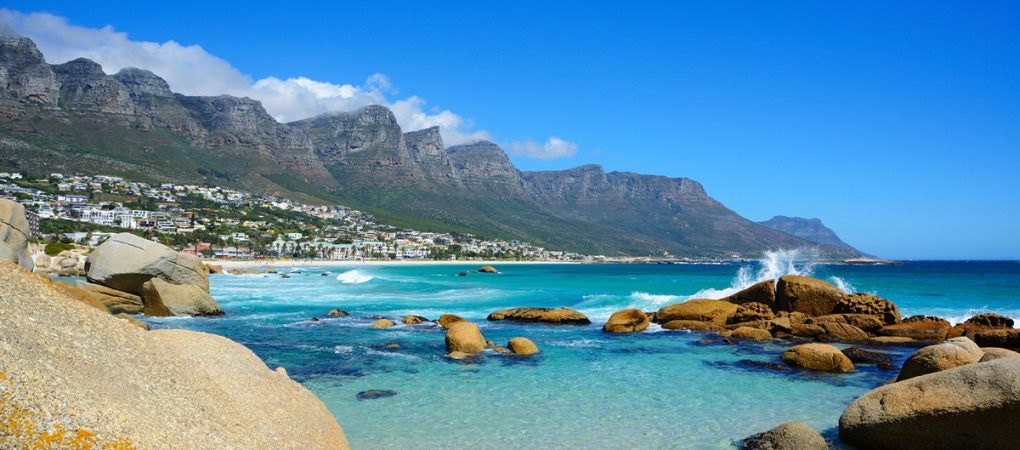
What safari feels like in South Africa
South African safari can feel polished.
Many lodges are highly serviced, the roads and domestic flight network are comparatively easy to navigate, and the private safari industry is extremely mature.
Wildlife viewing in many private reserves can be intense.
You may be tracking leopard in the morning and sitting with a pride of lions before breakfast.
Guides in private reserves can often leave established roads for responsible off-road viewing, depending on the reserve's rules.
Night drives are also common.
That means the safari can be highly productive, particularly for first-time visitors who want to see major wildlife.
Where South Africa is strongest
South Africa wins when the traveller wants more than safari.
If you tell us:
“I want great wildlife, but I also want restaurants, wine, Cape Town and beautiful hotels.”
South Africa immediately becomes extremely difficult to beat.
It is also a strong choice for families because of the variety of accommodation and the availability of malaria-free safari regions in parts of the country.
The trade-off
If your definition of luxury is travelling for hours without seeing another vehicle, Botswana or Zambia may feel more compelling.
Some South African safari areas are busy.
That does not make them bad.
It simply means that the safari experience is different.
Choose South Africa if: you want the most versatile first trip to Africa and safari is one part of a broader journey.
Botswana: the wilderness choice
Botswana's appeal is much easier to understand once you stop comparing lodges.
The luxury is the environment.
The Okavango Delta is unlike almost anywhere else in Africa.
Seasonal floodwaters spread across an otherwise dry region and create a vast network of floodplains, islands, channels and wildlife habitat.
Safari might involve a game drive in the morning, a mokoro journey in the afternoon and a boat safari later in the trip.
Many camps sit inside large private concessions with relatively low guest numbers.
That means you can spend significant periods of time without seeing another safari vehicle.
For some travellers, that changes everything.
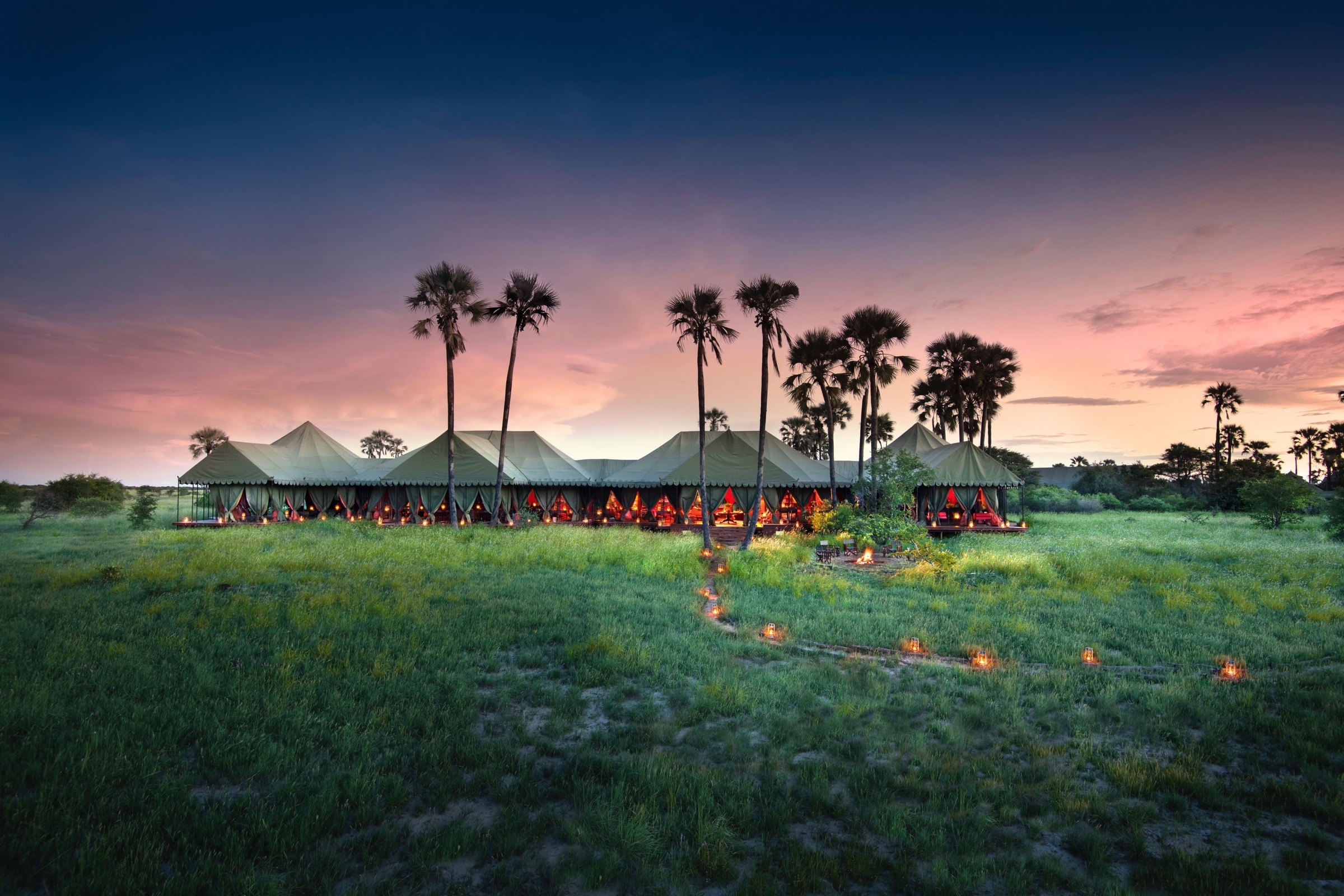
What safari feels like in Botswana
Botswana feels remote.
Light aircraft flights are a normal part of the journey.
You land on small airstrips.
You move between camps with only a handful of other travellers.
The scale of the wilderness becomes part of the experience.
It is not necessarily about rushing between sightings.
It is about being somewhere wild.
Botswana also provides excellent predator viewing, particularly in several parts of the Okavango, Moremi, Linyanti and Savuti ecosystems.
Then there is Chobe, renowned for its elephants and river-based safari.
The big Botswana misconception
Travellers often assume Botswana means water everywhere.
It does not.
The Okavango's flood is seasonal, and different camps can experience dramatically different water levels.
A camp marketed as being “in the Okavango Delta” does not automatically guarantee permanent boating or mokoro activities.
You need to understand exactly where the camp sits.
This is one of the reasons safari geography matters so much.
Where Botswana is strongest
Botswana is particularly good for travellers who have the budget to prioritise wilderness and exclusivity.
It can also be exceptional for honeymooners and couples who want privacy.
If your dream is:
“I want to land somewhere remote and disappear into the bush.”
Botswana belongs very high on the list.
The trade-off
Botswana is generally more expensive than South Africa.
The combination of remote camps, light aircraft, low-density tourism and expensive logistics pushes pricing upward.
It also does not provide the easy city, food and wine extension that South Africa does.
Choose Botswana if: you want your money to buy space, privacy and wilderness.
Tanzania: the wildlife spectacle
Tanzania is different again.
The appeal is scale.
The Serengeti feels huge because it is huge.
Wildlife can stretch across landscapes in numbers that are difficult to imagine until you see them.
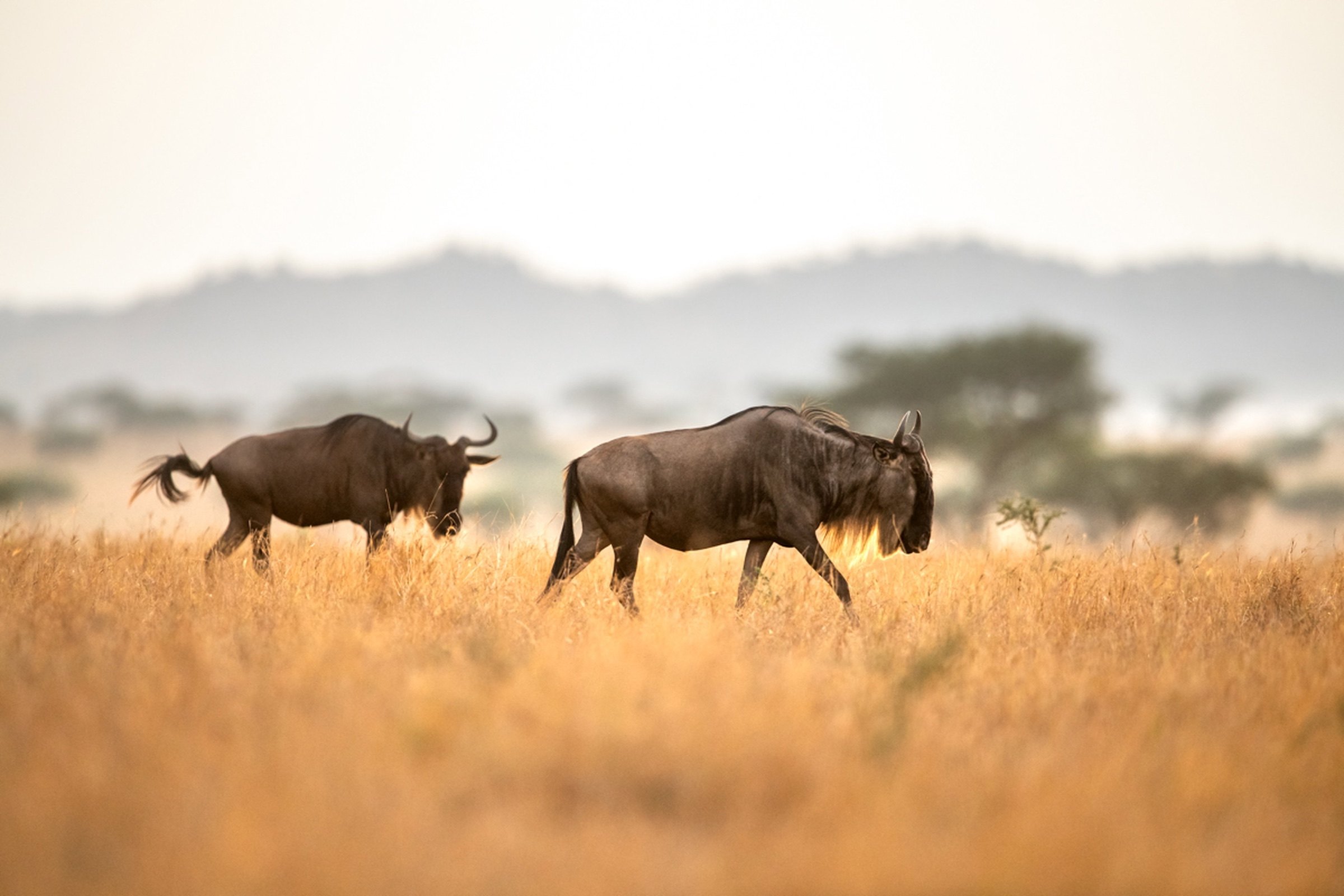
Then there is the Great Migration.
This is not one event.
It is a year-round movement of wildebeest and other herbivores through the Serengeti-Mara ecosystem.
Different periods of the year produce completely different experiences.
Calving in the southern Serengeti and Ndutu is not the same safari as the northern river crossings.
And neither is the same as travelling through the central Serengeti.
That makes Tanzania incredibly rewarding.
It also makes planning important.
What safari feels like in Tanzania
Tanzania delivers the classic East African safari image.
Open plains.
Acacia trees.
Large herds.
Lions in the grass.
Cheetahs using termite mounds as viewpoints.
Huge skies.
The Ngorongoro Crater gives the journey another dimension, while Tarangire adds elephants, baobabs and a different ecosystem entirely.
You can create a safari with extraordinary ecological variety without leaving northern Tanzania.
Where Tanzania is strongest
If your priority is wildlife spectacle, Tanzania is difficult to beat.
It is particularly strong for travellers who have dreamed specifically about the Serengeti.
It also works beautifully for a safari and beach combination.
After the bush, you can fly to Zanzibar or another Indian Ocean location.
That makes Tanzania very attractive for honeymoons.
The trade-off
The most famous parts of Tanzania can become busy.
During sought-after migration periods, you should not assume you are going to have every wildlife sighting to yourself.
That is particularly true around headline events such as river crossings.
Private concessions and carefully selected camps can alter that experience, but the Serengeti operates differently from a remote Botswana concession.
Driving distances also matter.
A badly designed Tanzania itinerary can involve spending far too long in a vehicle travelling between places rather than actually enjoying them.
Choose Tanzania if: you want enormous landscapes, extraordinary wildlife density and one of safari's greatest natural spectacles.
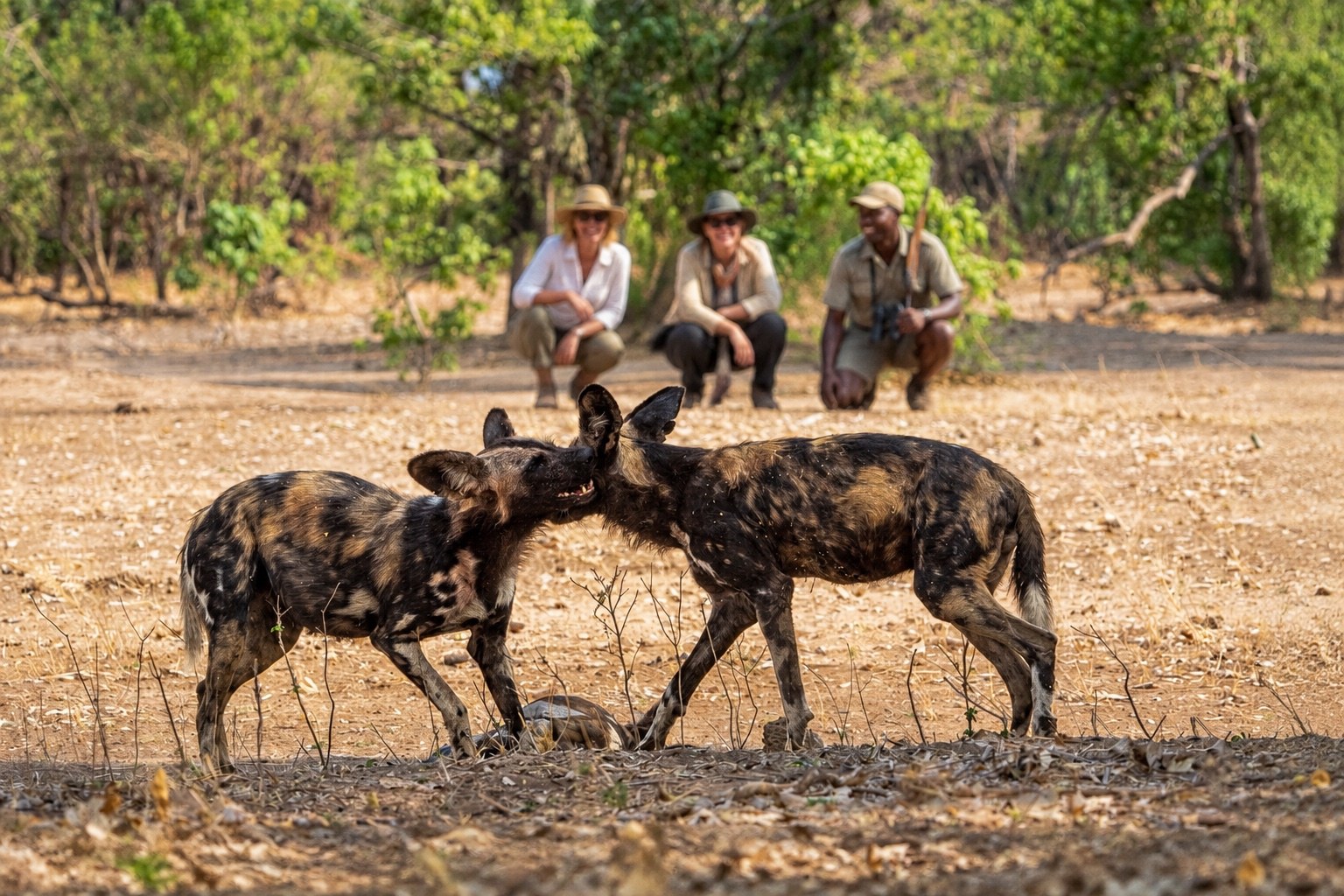
Zambia: the safari purist's choice
Zambia is where this comparison becomes interesting.
A traveller considering their first safari may never have thought about Zambia.
A traveller who has been on safari several times often has.
South Luangwa has a legendary reputation for guiding and walking safari.
Instead of seeing Africa only from a vehicle, you can experience it on foot.
Suddenly the safari becomes about far more than the Big Five.
Tracks matter.
Bird calls matter.
Wind direction matters.
Plants matter.
The guide's knowledge matters enormously.
Safari slows down.
And because it slows down, you start noticing more.
What safari feels like in Zambia
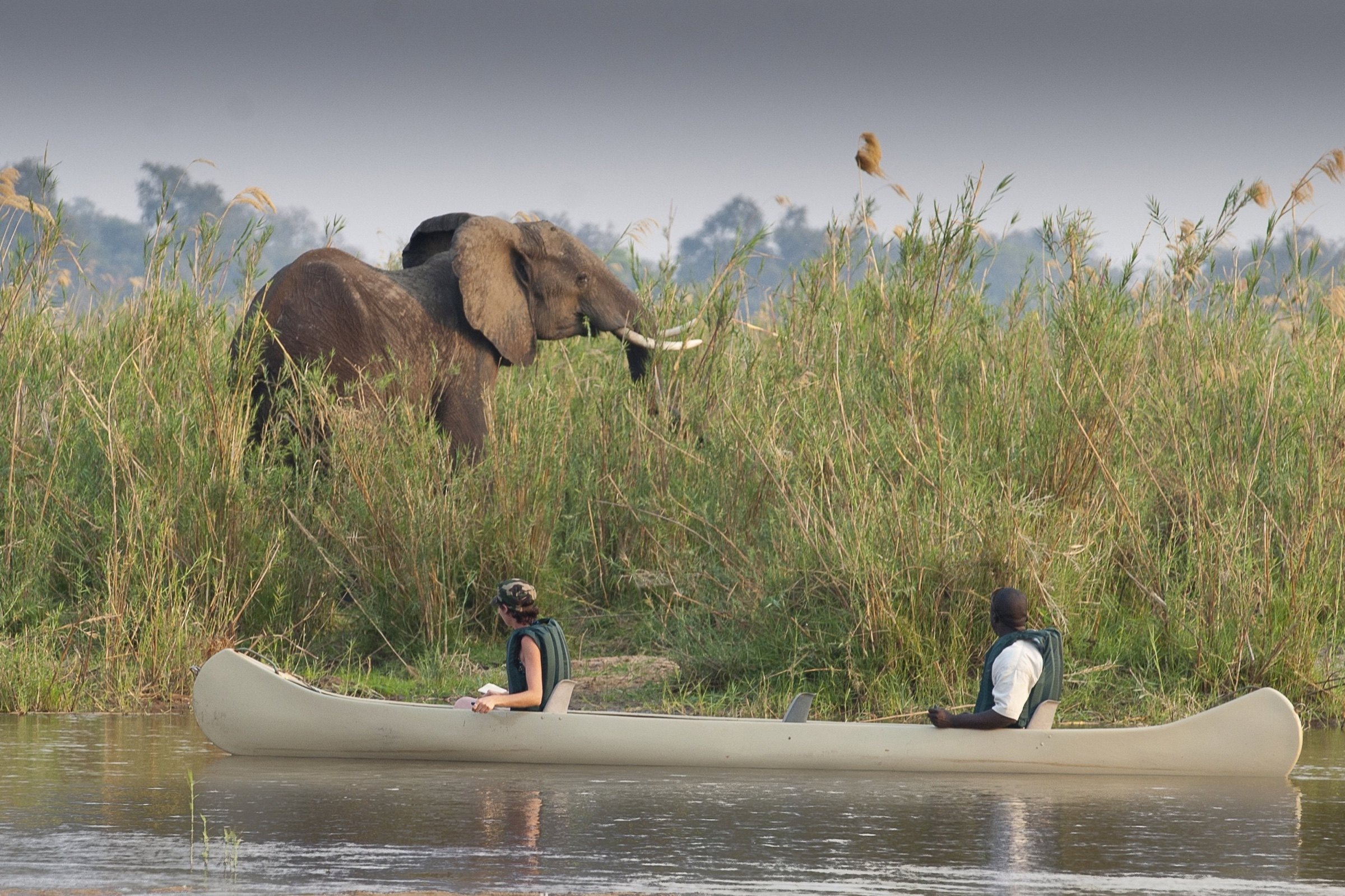
Zambia can feel intimate.
Small bush camps are an important part of the safari culture.
You may spend several nights in one camp before moving to another in a different part of the same ecosystem.
The experience can be less about extravagant architecture and more about where you are.
South Luangwa offers superb vehicle safari as well as walking.
The Lower Zambezi creates another type of experience entirely, with boating and canoeing complementing conventional game drives.
Where Zambia is strongest
Guiding.
Walking.
Small camps.
Immersion.
Travellers who already understand that safari is about more than ticking animals off a list often fall in love with Zambia.
It can also represent excellent value when compared with some of Botswana's most expensive camps.
The trade-off
Zambia can feel less polished.
Some camps are highly seasonal and close during the rains.
Road and air logistics can be less seamless than South Africa.
And if your vision of luxury requires huge suites, multiple restaurants, spas and extensive lodge facilities, you need to choose carefully.
But that is also the point.
Zambia is often at its best when the wilderness is allowed to be the luxury.
Choose Zambia if: you want to understand safari more deeply rather than simply see more animals.
Which has the best wildlife?
This sounds like a simple question.
It isn't.
If you mean the greatest number of animals across enormous landscapes, Tanzania has an extraordinary case.
If you mean consistent Big Five viewing, South Africa's private reserves can be exceptional.
If you mean excellent wildlife with low vehicle density, Botswana is incredibly strong.
If you mean predators, guiding and immersive wildlife experiences, Zambia deserves serious consideration.
The better question is:
How do you want to experience wildlife?
That answer usually points us toward the right country.
Which has the best lodges?
South Africa probably has the broadest overall range.
You can move from excellent mid-market safari lodges to some of the continent's most sophisticated luxury properties.
Botswana has extraordinary high-end camps, but you are often paying as much for location and exclusivity as for the room itself.
Tanzania ranges from mobile tented camps following wildlife movements to highly luxurious permanent lodges.
Zambia has superb luxury camps too, but many of its most memorable properties are deliberately intimate rather than extravagant.
Again, “best” depends on what you value.
If you care primarily about design, spa and private pools, your answer may be different from somebody who wants six tents and an exceptional guide.
Which is best for your first safari?
For the majority of first-time visitors, we would probably begin the conversation with South Africa or Tanzania.
South Africa is easier to combine with other experiences.
Tanzania offers the classic wildlife spectacle many people imagine when they first think about safari.
Botswana also makes an exceptional first safari if the budget allows and wilderness is the priority.
Zambia suits first-time travellers too, particularly those who are naturally adventurous and already know they value guiding and immersion.
There is no rule saying you need to “graduate” to Zambia or Botswana.
The traveller determines the destination, not the number of safaris they have already taken.
Which is best for honeymooners?
All four can be exceptional.
But for different reasons.
South Africa works beautifully when you want Cape Town, wine, excellent restaurants and safari.
Botswana works when you want privacy and remote camps.
Tanzania works when you want dramatic safari followed by Zanzibar.
Zambia works for couples who want something intimate, adventurous and less conventional.
The question again becomes what kind of honeymoon you actually want.
Which is best for families?
South Africa often has the advantage.
There are many lodges with family suites, children's programmes and flexible accommodation configurations.
Road and flight logistics can also be easier.
Tanzania is brilliant for older children who will appreciate wildlife and longer game drives.
Botswana can work extremely well for families, especially with private vehicles or exclusive-use accommodation, although some camps have minimum age restrictions for particular activities.
Zambia can also work for families, but walking and some specialist activities may have age restrictions.
Family safari needs to be designed around the children's ages rather than simply selecting a family room.
Which is best if you hate crowds?
Botswana.
That is the simplest answer in this article.
But the full answer is more nuanced.
Private reserves and concessions in all four countries can provide extremely low-density safari.
There are areas of South Africa where sightings are carefully managed.
There are remote parts of Tanzania where very few vehicles operate.
There are camps in Zambia where you can spend significant amounts of time without seeing anybody else.
But Botswana's overall safari model makes low-density wilderness one of its strongest characteristics.
Which is best if you want to walk?
Zambia.
South Luangwa's walking tradition is fundamental to the country's safari identity.
South Africa, Botswana and Tanzania also offer walking experiences at selected camps and reserves.
But if walking safari is one of the primary reasons you are travelling, Zambia should be one of the first places you investigate.
Which is best for safari and beach?
Tanzania has the cleanest answer.
Serengeti plus Zanzibar is a classic combination for a reason.
South Africa can also work extremely well with Mozambique.
But if you specifically want to stay within one country and combine serious safari with the Indian Ocean, Tanzania is extremely strong.
Which is best for safari plus city?
South Africa.
Cape Town changes the entire shape of the trip.
You can spend several nights in one of the world's great destination cities and then fly directly into safari.
For travellers who do not want fourteen straight days of wildlife, that variety can be extremely valuable.
What if you still cannot choose?
Then you probably should not choose yet.
This is where we would stop talking about countries and start talking about you.
We would ask:
What made you want to go to Africa?
How important is wildlife?
How important is privacy?
Do you enjoy moving around or prefer staying longer in fewer places?
What sort of accommodation do you normally love?
Are you interested in walking?
Do you want a beach?
Do you want Cape Town?
What is your budget?
When can you travel?
Have you been on safari before?
Those answers usually make the destination much clearer.
You can also combine them
You do not necessarily need to choose only one.
South Africa and Botswana work beautifully together.
South Africa and Zambia can create a more adventurous contrast.
Tanzania is often best combined with Zanzibar rather than adding another safari country unnecessarily.
Botswana and Zambia can create an exceptional wilderness-focused journey for a more experienced traveller.
But we would never combine countries just because we can.
Every additional country means another transfer, flight, border and travel day.
A good safari is not measured by how many passport stamps you collect.
Our conclusion
If we had to reduce the four destinations to four ideas:
South Africa is versatility.
Botswana is wilderness.
Tanzania is spectacle.
Zambia is immersion.
None is better than the others.
They simply answer different questions.
The goal is not to choose the safari destination that wins somebody else's ranking.
It is to choose the one that gives you the Africa you are actually imagining.