




Many first-time safari travellers assume the national park is automatically the best place to go. It is the name they know, the place that appears on maps, and often the place that seems most authoritative at first glance.
But in safari, name recognition and experience quality are not the same thing. Some of the best safari lodges in Africa sit not inside the headline national parks, but in adjacent or nearby privately managed safari areas, private reserves, conservancies, or concessions with different access rules. That matters because those rules shape the safari itself.
Vehicle density, guiding flexibility, traversing rights, and surrounding land use all influence what a guest actually experiences once they are out in the bush. Access matters more than marketing language.
What we mean by private conservancies
For simplicity, this article uses private conservancies as a broad term for privately managed safari areas that operate under different access rules from national parks. Depending on the region, these may be called private reserves, conservancies, or concessions. The names vary. What matters is the operating model.
In practical terms, these areas are usually managed with more flexible safari rules than state-run national parks. That can affect everything from where vehicles are allowed to drive, to how many vehicles may gather at a sighting, to whether walking safaris or night drives are possible.
The point is not that every private conservancy is automatically better. It is that the rules of access are different, and those differences can change the feel, pace, and quality of a safari in very meaningful ways.
Why access rules matter so much
Most travellers do not book safari for the rules, but the rules shape almost every memorable part of the experience. If a guide cannot leave the road, the vehicle may have to stop well short of a sighting. If night drives are not permitted, the transition from day into evening wildlife behaviour is lost. If multiple vehicles can queue freely at a sighting, the mood changes.
If traversing rights are limited, a guide may not be able to continue following an animal once it crosses an invisible boundary. In plain English, traversing rights are the permissions that allow a guide to move across neighbouring safari land instead of stopping abruptly at a property line. Strong traversing rights make a territory feel larger and more fluid. Weak ones can make a map look generous while the lived experience feels much tighter.
These details may sound technical on paper, but they are not technical in practice. They affect whether a sighting feels calm or crowded, whether an encounter unfolds naturally or ends abruptly, and whether the safari itself feels fluid or constrained. For luxury travellers seeking privacy and ease, this matters enormously.
Kruger National Park vs Sabi Sands and Timbavati
South Africa offers one of the clearest examples of how access changes safari. Kruger National Park is vast, important, and wildlife-rich. It absolutely has value. But it is governed by rules that shape the experience in a more structured way. Vehicles stay to designated roads. Off-road driving is generally not part of the model. The rhythm can feel more public, especially in busy areas or around strong sightings.
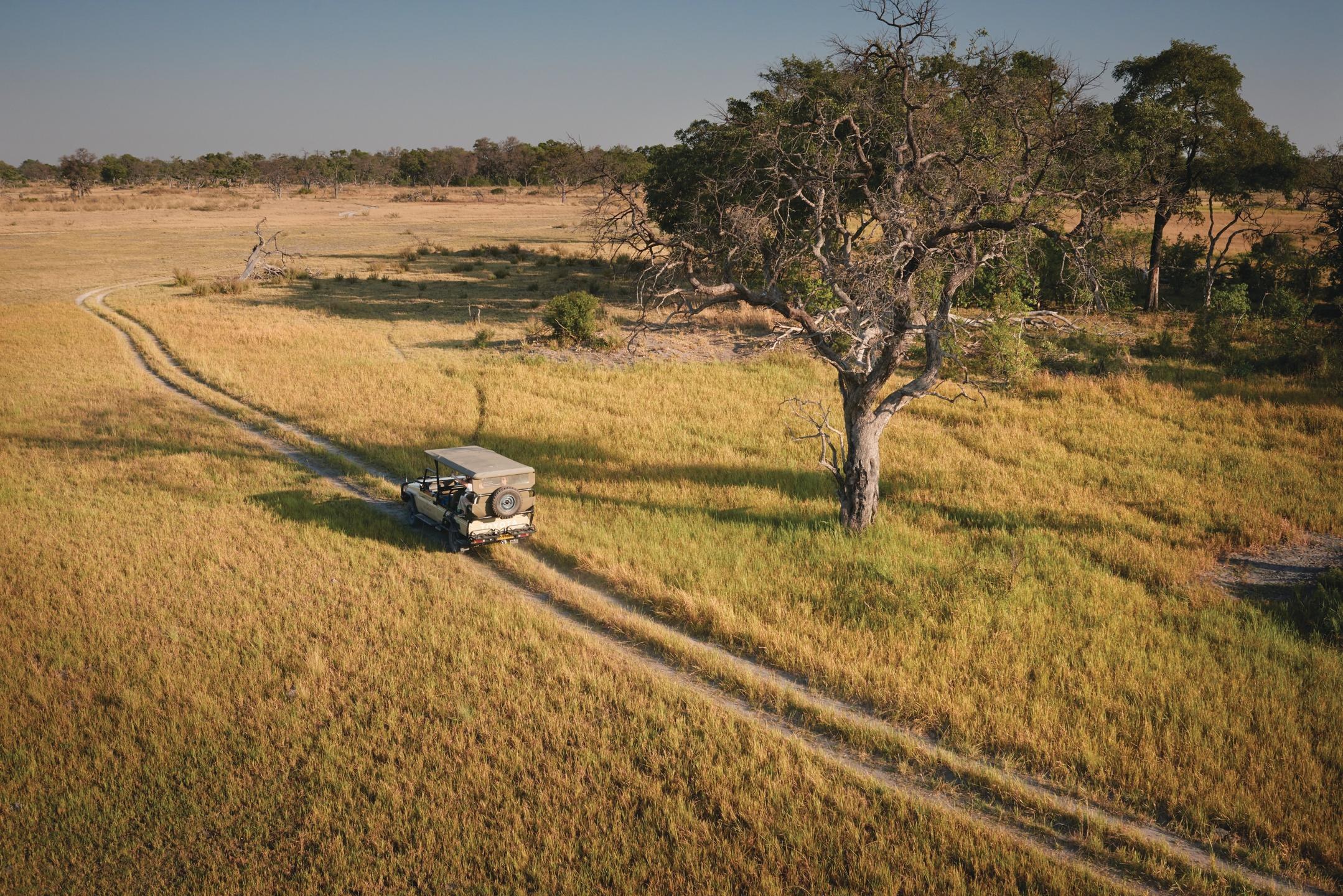
By contrast, private reserves such as Sabi Sands and Timbavati operate with different permissions and a more flexible guiding model. In the right areas, guides may be able to track off-road in order to position sensitively for a sighting, continue following an animal through a territory, offer night drives, and create a safari that feels more fluid and less crowded.
That does not make the national park bad. It simply makes it different. Kruger is often better understood as a broader public wildlife landscape, while the adjoining private reserves are where many luxury lodges are able to deliver a more refined safari rhythm. For a first-time client, that distinction can change everything.
The Maasai Mara and the conservancy model
East Africa presents the same question in a different format. The Maasai Mara proper is iconic for good reason. But the wider Mara ecosystem also includes private conservancies that operate under different rules and with different levels of vehicle density. This can have a major impact on the feel of the safari.
In the main reserve, sightings can at times attract a significant number of vehicles. In conservancy areas, there are often stricter limits on vehicle numbers, a greater sense of space, and more flexibility in how game viewing is structured. Depending on the conservancy, activities such as walking safaris or night drives may also be possible in ways they are not within the national reserve itself.
Again, the point is not that one model is universally superior. It is that the experience changes. Travellers who value privacy, pacing, and a more contained atmosphere often find the conservancy model much more aligned with how they want to travel.
The practical differences clients actually feel
The most important differences are the ones a guest feels directly. Off-road driving can allow a guide to approach a sighting more intelligently when appropriate and permitted. Night drives extend the safari day into a completely different atmosphere, revealing behaviour that simply does not appear in daylight. Walking safaris replace distance with intimacy, shifting the focus from spectacle to awareness. Vehicle limits at sightings can preserve calm and reduce the sense of crowding. Shared versus exclusive use changes whether a game drive feels fully your own or part of a more public rhythm.
This is also why clients who care about privacy should think beyond the park name. A brochure may promise wilderness, but the guest experience is shaped by the mechanics underneath it: how many vehicles are allowed, whether guides can adapt, how much room there is to read a sighting properly, and whether the day feels held rather than hurried.
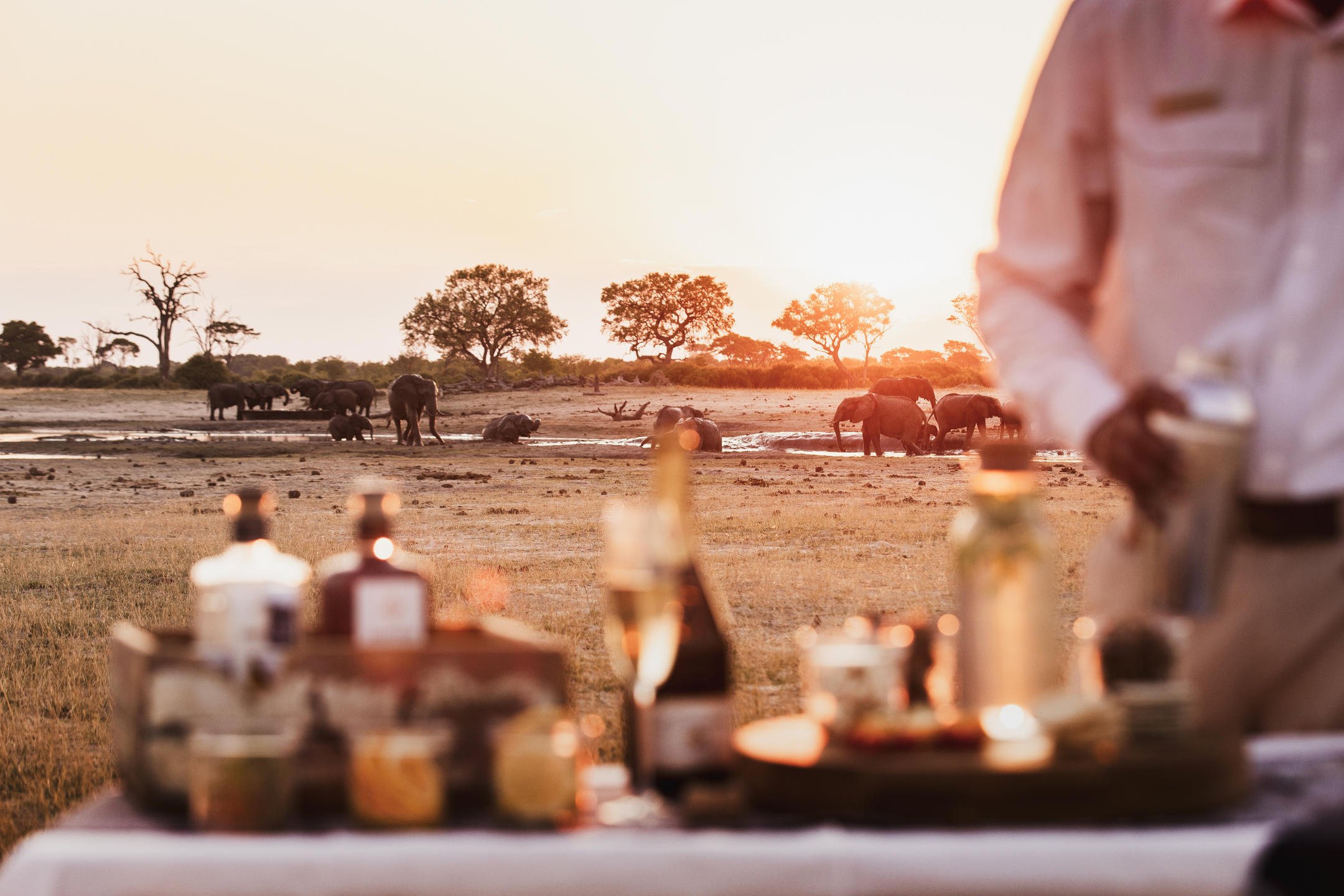
Private Guiding
Why most luxury lodges sit where they do
There is a reason so many of Africa's strongest luxury safari lodges are located in private conservancies, concessions, and reserves rather than inside the headline national park itself. It is not only about exclusivity. It is about control of experience.
These areas often make it possible to manage guest density, guiding style, activity mix, and overall rhythm in a way that is much harder to achieve under the more standardised rules of a national park. For travellers who want a safari to feel calm, considered, and spacious, that matters more than the fame of the park name.
The same principle sits underneath our view of the Delta in The Okavango in Dry Season: Where Privacy Still Changes Everything: seasonality matters, but access and trip design still decide how the experience feels on the ground.
Private does not always mean better
This is the part the luxury travel industry often glosses over. Private is not a magic word. A privately managed safari area can still disappoint if the guiding is weak, the vehicle density is poorly controlled, the neighbouring land use is not well handled, or the operation relies too heavily on the idea of exclusivity rather than the actual quality of the experience.
The right question is not whether a place is private. The right question is what kind of access it offers, how those rules are managed, and whether the result aligns with the type of safari you actually want. That is where discernment matters.
Final thought
The best safari is rarely chosen by reputation alone. It is chosen by understanding how the landscape is managed, how the access works, and what kind of experience those rules make possible. National parks matter. Private conservancies matter. The question is not which one sounds more impressive. The question is which model best supports the kind of journey you want to have.
For travellers who value privacy, flexibility, and a more composed safari rhythm, the answer is often found in the access model rather than the headline name. If you want help understanding which safari model best suits the way you travel, enquire privately.
Continue reading
For a more atmospheric perspective on privacy and safari design, read What It Means to Disappear Well: Choosing Africa with Intention. For a practical Delta example, read The Okavango in Dry Season: Where Privacy Still Changes Everything. For the wider regional frame, LGBTQ+ Travel in Southern Africa: Where It Works, Where It Doesn't, and Why adds the legal and hosting context around privacy-led travel in the region.