






For legal protections, local context and practical planning, read our considered guide to LGBTQ+ travel in South Africa.
Cape Town is not only the most recognisable queer city in Africa. It is still the most complete.
That distinction matters. A city does not become the gay capital of a continent simply by having nightlife or a Pride event. It earns that position when legal confidence, social ease, hospitality maturity, and public visibility begin to reinforce one another. Cape Town does that better than anywhere else in Africa.
For LGBTQ+ travellers, that translates into something more meaningful than branding. It means being able to move through a city with less self-management. It means dinners that feel normal rather than coded. It means beach days, hotel arrivals, neighbourhood walks, and late nights that can often happen with a level of ease still uncommon elsewhere on the continent. The point is not that Cape Town is perfect. It is that it is unusually liveable.
It starts with ease, not nightlife
The strongest argument for Cape Town is not the party scene. It is the everyday confidence the city can offer. That confidence begins with South Africa's legal framework, but law alone is not the reason the city works. What matters more to the traveller is the way hospitality, neighbourhood culture, and public life combine to make queer presence feel legible rather than exceptional.
In the right parts of Cape Town, holding hands in public, checking into a hotel as a couple, or moving through a restaurant or bar without second-guessing the room can feel refreshingly straightforward. That is a serious point of difference in an African context. For the wider regional comparison, LGBTQ+ Travel in Southern Africa: Where It Works, Where It Doesn't, and Why gives the fuller country-by-country reading.
De Waterkant still matters
If there is a historic heart to gay Cape Town, it remains De Waterkant. That does not mean the city's queer life is confined to one neighbourhood. It is not. But De Waterkant still carries symbolic and practical weight. It has the right density of bars, restaurants, boutique stays, and walkable streets to make a visitor feel oriented quickly. It also has continuity, which matters more than trend.
Café Manhattan belongs in that story. It is not simply another venue. It represents one of the city's longstanding queer institutions, the kind of place that gives a neighbourhood memory as well as energy. It works because it feels woven into the life of the area rather than staged for visitors.
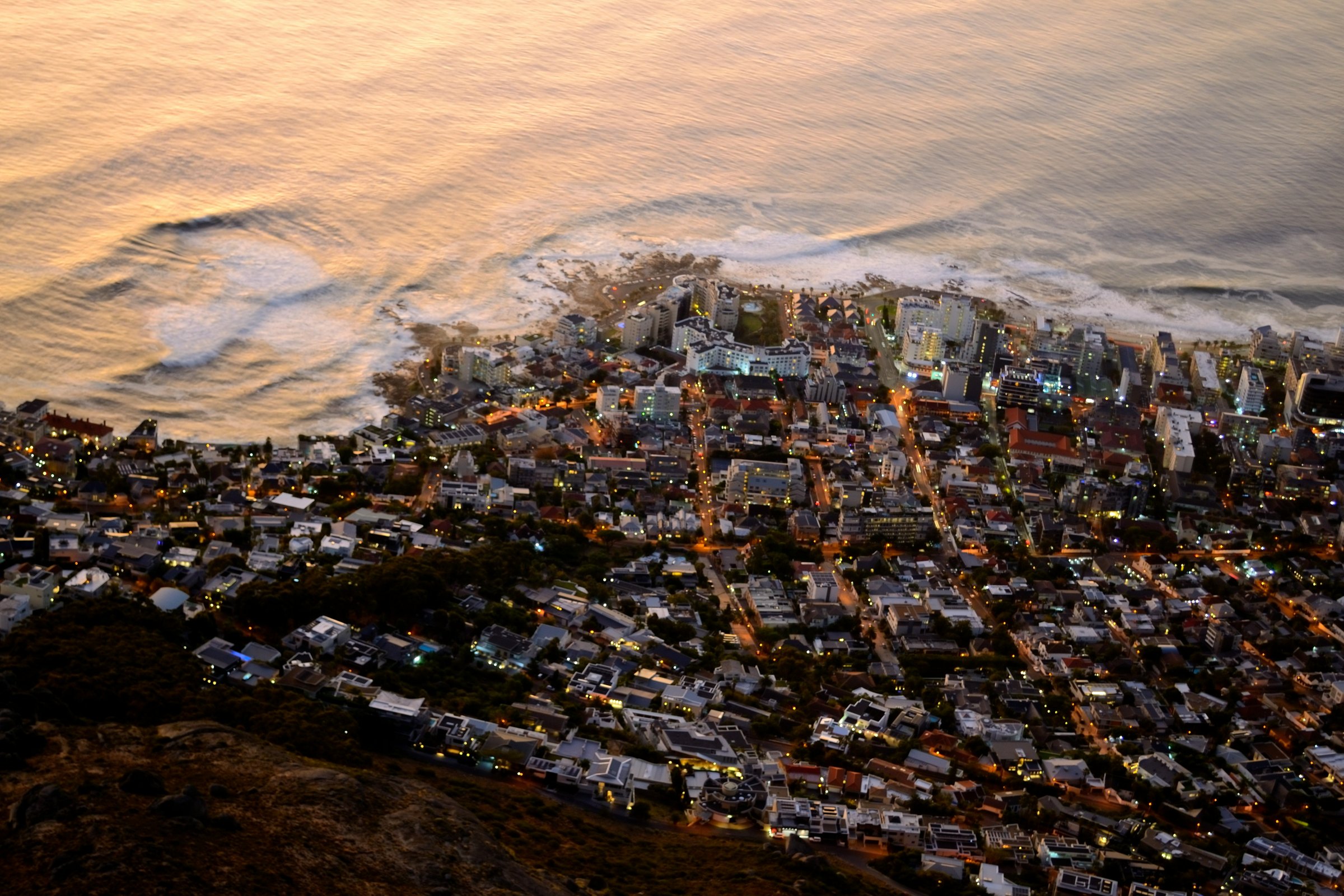
City Bowl
Cape Town's queer appeal is strengthened by streets that feel intimate, liveable, and unmistakably of the city.
Cape Town works because queer life is not confined to one lane
This is one of the city's biggest strengths. You can have a queer Cape Town experience that is nightlife-heavy, but you do not need to. The city supports many different rhythms. Some travellers want long lunches, design hotels, beach afternoons, and dinner that turns into drinks. Others want a more social run of bars and clubs. Others again want something more mixed, with cultural texture, city energy, and only selective nightlife folded in.
That flexibility is part of why Cape Town works so well for couples, solo travellers, and friends. The city lets queer travellers choose how visible, social, and relaxed they want to be. It does not force everyone into the same version of the scene.
The scene is real, but it is broader than clubs
Cape Town Pride remains one of the city's clearest annual queer markers, while seasonal fixtures such as the Pink Party and MCQP give the summer calendar real continuity. On the ground, Café Manhattan still anchors De Waterkant, and venues such as Zer021 bring a more nightlife-led energy when travellers want it. What matters, though, is not any single address. It is the fact that Cape Town has an ecosystem rather than a token scene.
The city is strongest when this range is understood properly. It is not only about where to dance. It is about the fact that there are social spaces, dinner spaces, women-led queer spaces, mixed spaces, and polished bars that allow queer life to spill naturally into the wider life of the city.
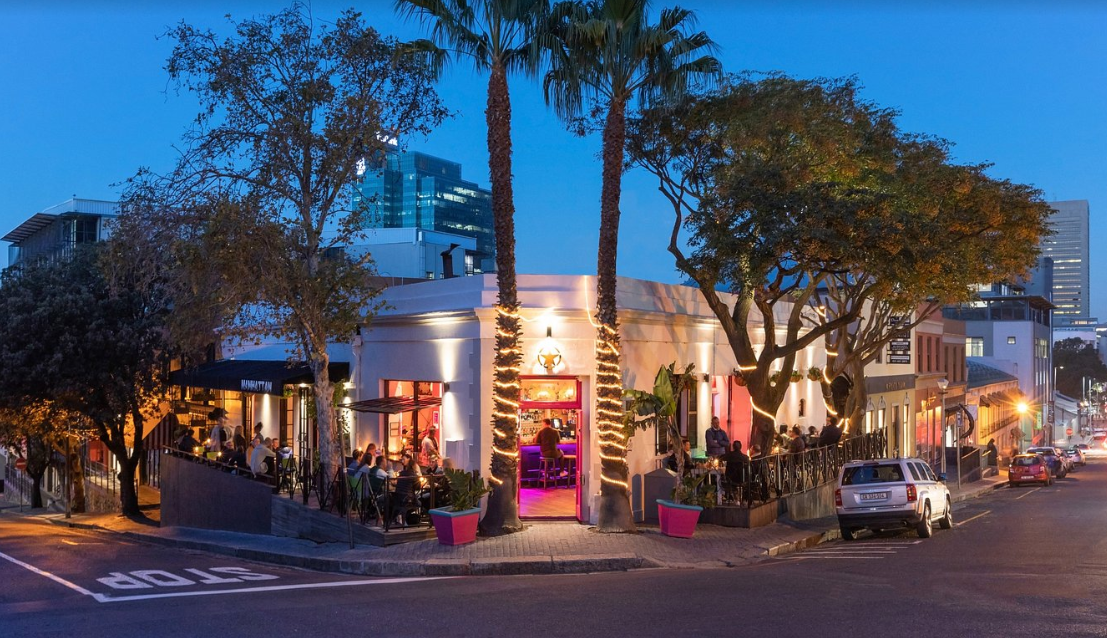
Café Manhattan, De Waterkant
Cape Town's social life works best when it feels polished, relaxed, and folded into a wider rhythm of living well.
The City Bowl gives the lifestyle context
Cape Town's queer appeal is strengthened by something many cities lack: the non-queer parts of daily life are also highly attractive. The City Bowl and its adjoining neighbourhoods offer design, architecture, restaurants, coffee, galleries, mountain access, and a pace that can shift easily from polished to relaxed. The Atlantic Seaboard reinforces that lifestyle proposition with beach culture, ocean light, and a more expansive social rhythm.
That matters because queer travellers do not only travel for designated queer spaces. They travel for cities where the whole lifestyle proposition feels good. Cape Town excels here. It is visually magnetic, yes, but also easy to inhabit. For travellers who care about aesthetics, atmosphere, and a strong sense of place, the city offers a quality of living that supports the queer experience rather than merely decorating it.
Why Cape Town still leads the continent
Other African cities have queer communities. Some have nightlife. Some have legal progress. Cape Town remains different because it combines more of the pieces in one place. It has the legal foundation. It has hospitality maturity. It has beach culture, urban culture, design, food, and mountain setting. It has neighbourhoods where queer life is visible. It has an events calendar with real continuity. Most importantly, it has a degree of public ease that allows many LGBTQ+ travellers to relax into the city rather than merely visit it carefully.
That is why Cape Town continues to hold this position. Not because it markets itself loudly, but because it works.
Cape Town is also a doorway into a wider South African journey
This is another reason the city matters commercially as well as culturally. Cape Town is often where a wider South African journey begins to make sense. It opens naturally into the Winelands, then into safari, or into a more social route shaped around style, food, and city life. For travellers who want that kind of urban start before the rest of the country unfolds, The Social Shift is the clearest Mason & Wild journey expression of this side of South Africa.
Final thought
Cape Town is still the gay capital of Africa because it offers more than a scene. It offers ease. It offers public confidence. It offers real hospitality, real continuity, and the simple luxury of being able to exist in the city without constantly recalibrating your visibility. For LGBTQ+ travellers, that is not a minor detail. It is often the difference between a destination that is attractive and one that is genuinely restorative.
For travellers drawn to Cape Town's style, confidence, and social ease, explore The Social Shift or enquire privately.
Continue reading
For a broader view of the country, read Destination Notes: South Africa.
For a regional legal and practical perspective, read LGBTQ+ Travel in Southern Africa: Where It Works, Where It Doesn't, and Why.