


There are landscapes that impress you, and there are landscapes that quiet you. Namibia belongs firmly to the second category. Not because it is empty, and not because silence there feels severe or withholding. Quite the opposite. Silence in Namibia often feels like relief.
It is a release from density, from social noise, from the subtle performance of being visible in too many shared spaces for too long. For travellers who want space, calm, and a more private kind of luxury, that distinction matters. This is part of what makes Namibia so compelling for LGBTQ+ travellers, especially couples, solo travellers, and small groups of friends who are not looking for spectacle in the social sense, but for the chance to feel the day open around them.
Namibia does not feel empty. It feels otherworldly
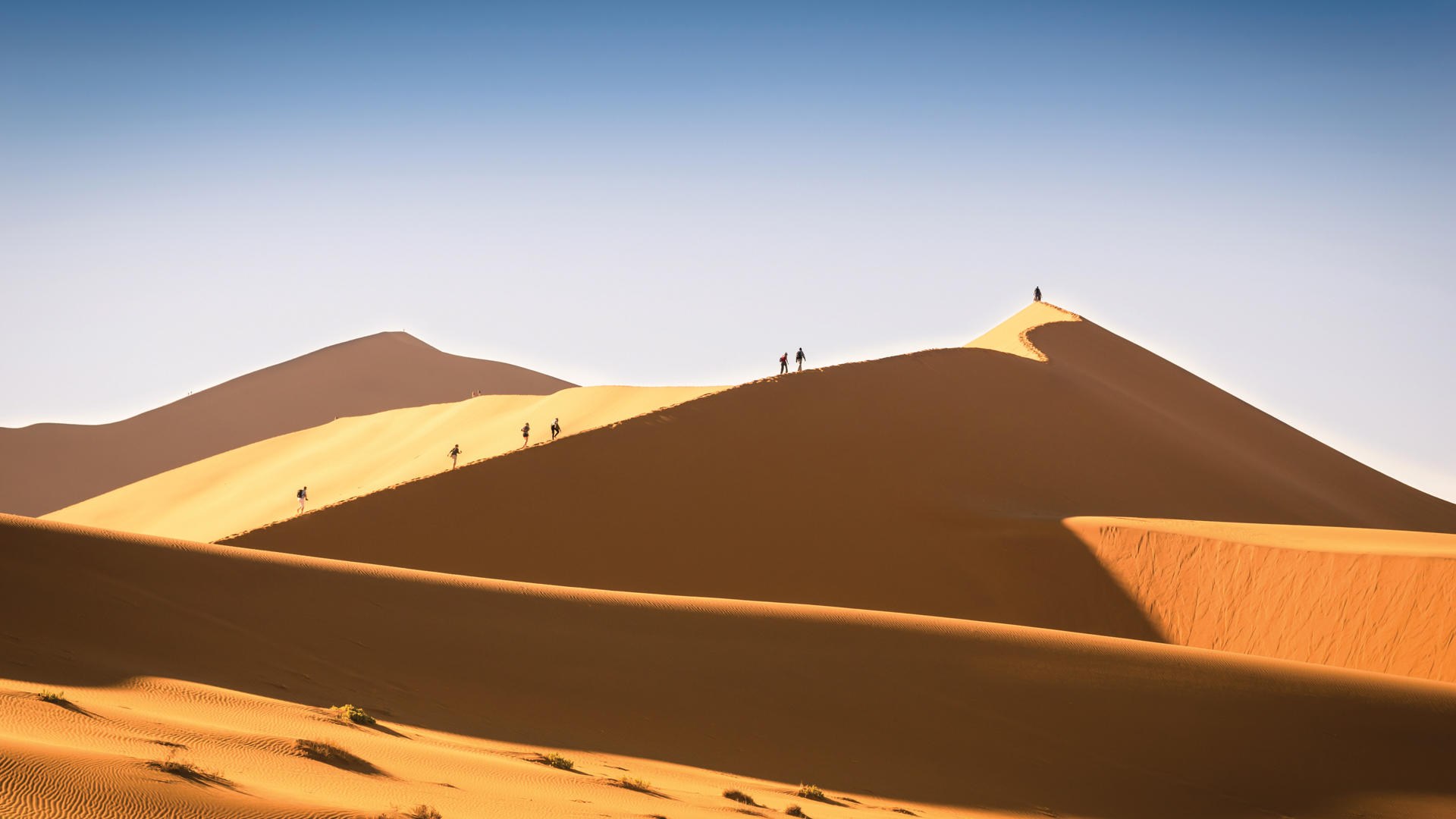
The first surprise of Namibia is often how unreal it feels. Sossusvlei in particular can look less like a destination than a different planet. The dunes rise in clean, improbable forms. The light changes the colour of the land by the hour. The scale is so complete that it can make human movement feel temporarily irrelevant. That is part of the experience. It places you inside something larger without making you feel diminished by it.
This is not emptiness in any simple sense. It is a landscape so singular that it quiets the usual clutter of attention. The beauty lies not only in its drama, but in its distinctness. Namibia does not resemble other safari destinations. It does not even always feel like Earth behaving normally. It feels almost Martian, but with life holding on in ways that are deeply moving to witness.
Silence here is not absence. It is relief
That is the part people often miss. Silence in Namibia is not the absence of sensation. It is the absence of pressure. There is a difference. For many travellers, especially those used to navigating the social texture of everyday life with a degree of vigilance, the relief of a place like this can feel unexpectedly physical. There is less to manage. Less to filter. Less ambient performance required. The landscape does not ask anything of you except attention.
That is one reason Namibia works so well for privacy-led travel. It offers calm without dullness. It offers solitude without isolation. It allows people to settle rather than withdraw. The luxury here is not simply in distance. It is in how much inner noise the landscape seems able to absorb.
The architecture matters because it knows when to step back
In Namibia, the built environment matters most when it understands its role. The strongest stays do not try to outcompete the landscape. They frame it. They borrow from its stillness, its materials, its horizon lines, and its sense of scale. Good architecture here should never feel like a statement imposed on the desert. It should feel like a way of entering it more carefully.
This is where quiet luxury becomes meaningful rather than decorative. A terrace that opens fully to the land. A suite positioned for first light and long shadows. Outdoor spaces that encourage stillness without theatricality. In the right place, architecture becomes part of the silence rather than a break from it.
That is an important distinction, because in a landscape this singular, poor design feels louder than it would anywhere else. Namibia rewards restraint. The best properties understand that their real task is not to impress you indoors, but to tune your attention more precisely to what is beyond the walls.
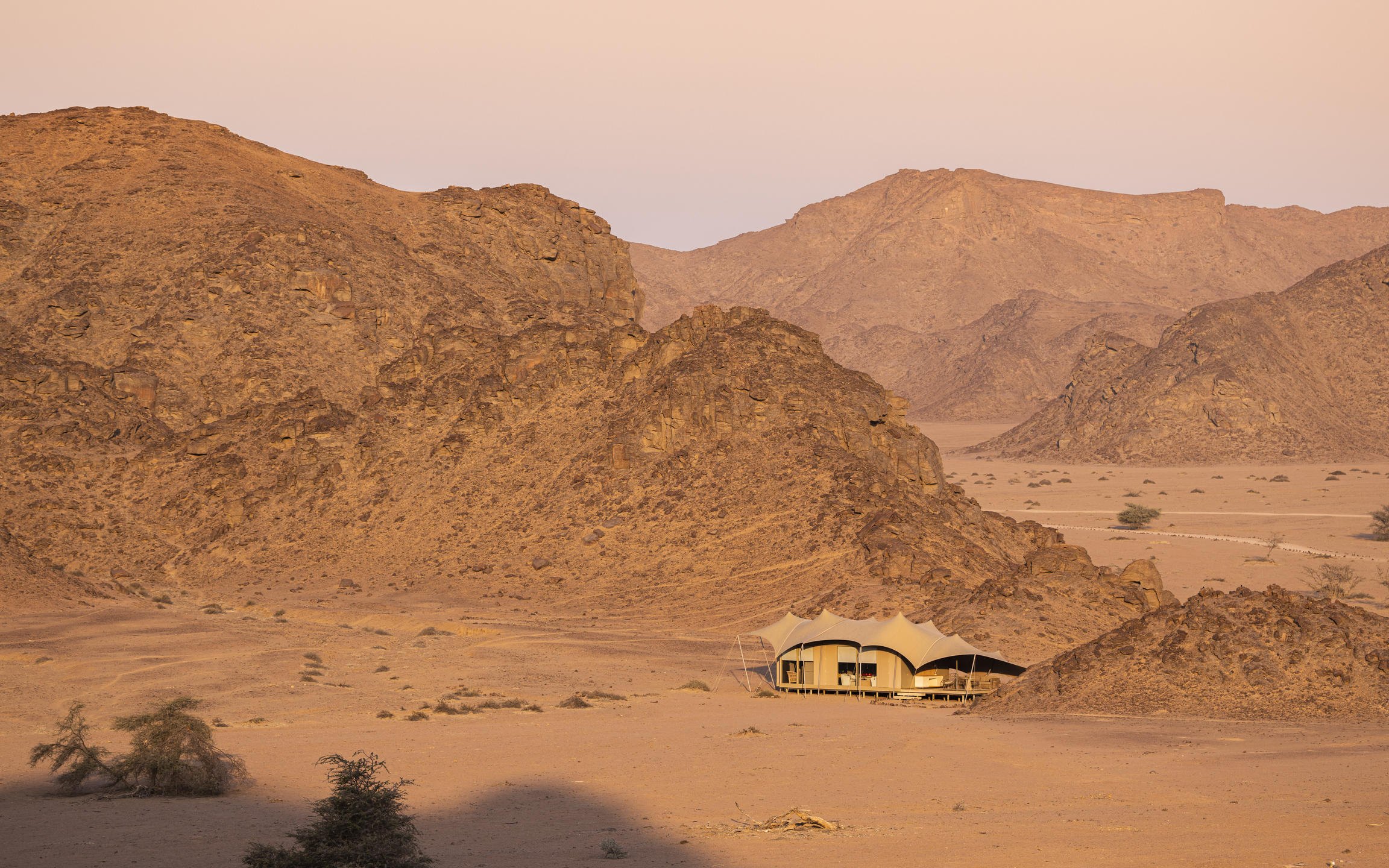
Desert Architecture
This is also why built space matters so much to the emotional quality of the trip. When a room, terrace, or courtyard is properly handled, it stops feeling like shelter in opposition to the desert and starts feeling like a controlled threshold into it. The architecture does not interrupt silence. It edits the way you receive it.
Sossusvlei proves that calm and awe can coexist
One of the smartest things about Namibia is that its calm is never boring. Sossusvlei may feel quiet, but it is not passive. You can climb the dunes in the cool of the morning and feel just how immense and shifting the terrain really is. You can watch how light redraws the landscape across the course of a day. You can witness life persisting in conditions that seem almost impossibly dry and stark, which is part of what makes the place so moving.
There is a resilience to Namibia that makes its beauty more than aesthetic. It is visible in the textures of the land, in the survival of life where it seems least likely, and in the way the desert keeps insisting on form, movement, and adaptation. That is part of the awe. Not just that Namibia is beautiful, but that it is alive on its own terms.
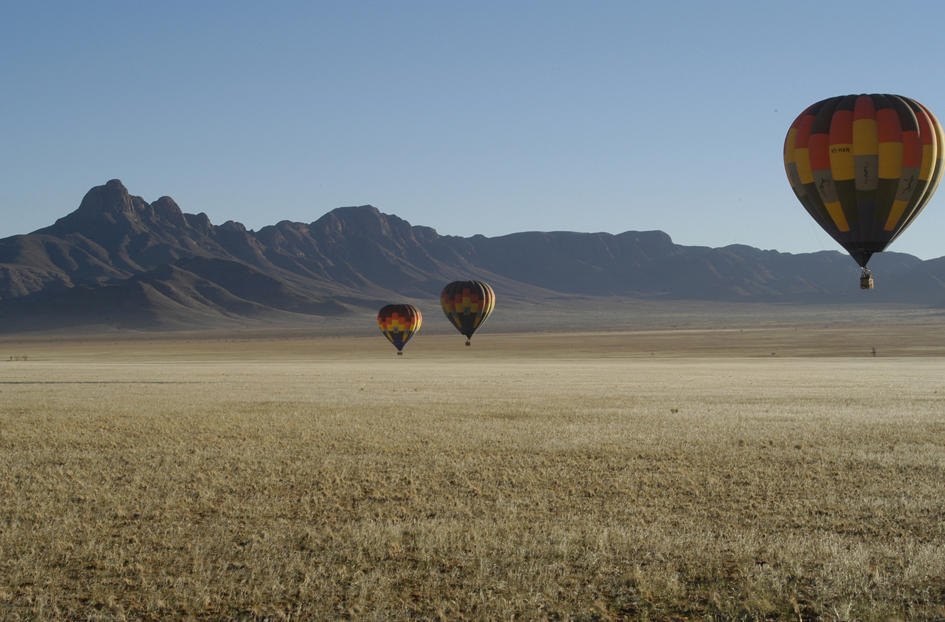
Sossusvlei
Extraordinary experiences feel different here
Namibia also offers some of the most memorable experiences in Southern Africa, but what makes them special is their relationship to the landscape rather than the adrenaline attached to them. Climbing dunes at dawn, floating above the desert in a hot air balloon, tracking the subtle signs of life through dry terrain, or simply watching shadow and silence reshape the day all feel heightened here because the environment is so singular.
Even movement becomes part of the stillness. That is why Namibia suits travellers who want more than passive luxury. It offers calm, but it also offers engagement. The difference is that the engagement feels deliberate, spacious, and deeply tied to place rather than performed for effect.
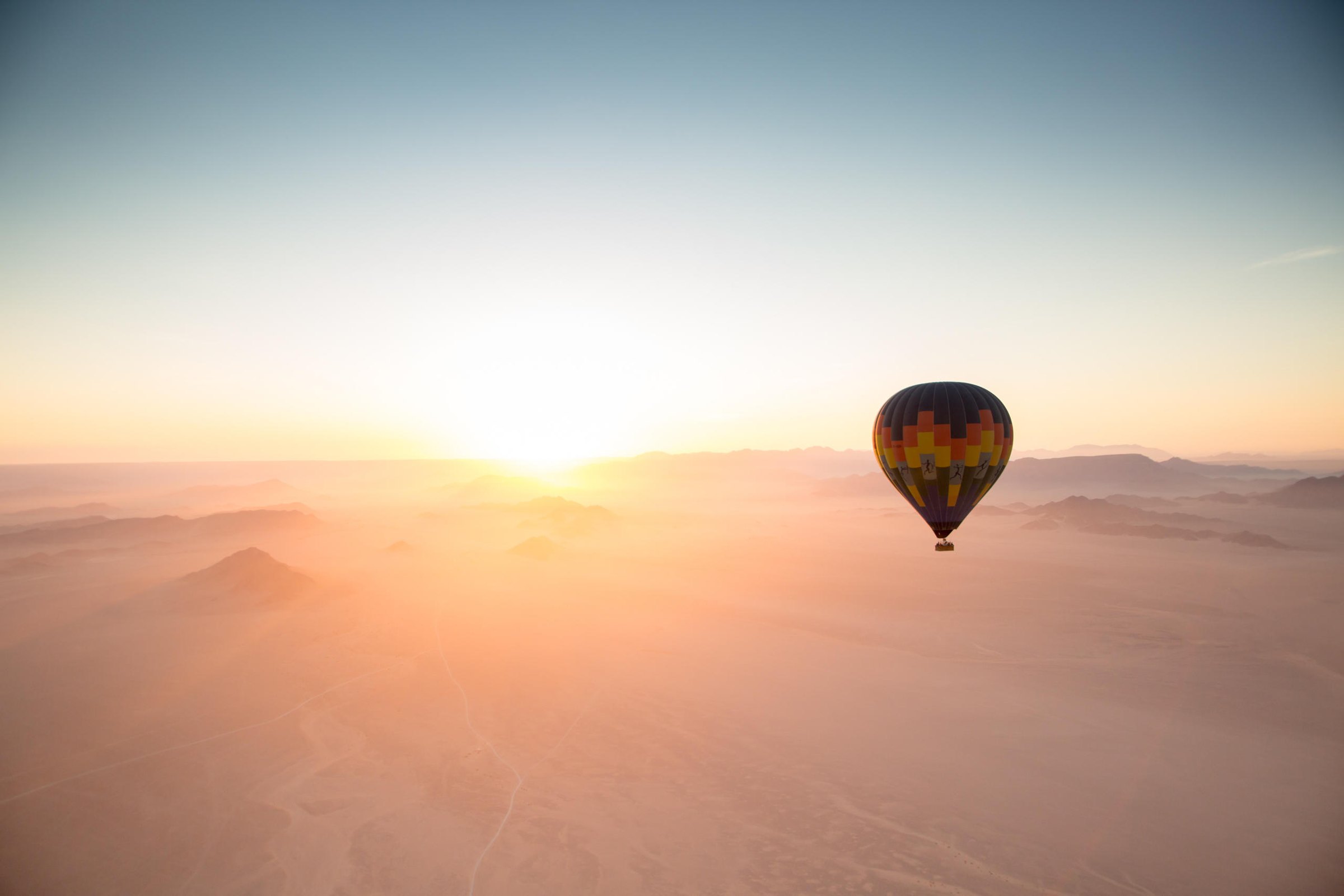
Namib Desert
Why Namibia suits privacy-led travellers so well
For privacy-led travellers, Namibia can be one of the most restorative destinations in Southern Africa. Its scale creates distance naturally. Its landscapes remove the usual social stage. Its strongest properties understand that quiet is part of the experience, not something to be filled. For LGBTQ+ travellers in particular, that can make a real difference. The luxury is not simply in where you stay. It is in how little friction the day contains.
This is why Namibia works so well for couples, solo travellers, and close friends travelling together. It allows intimacy without performance. It gives people room to think, to move, and to encounter a place that feels extraordinary without also feeling demanding.
For travellers drawn to that particular combination of stillness, design, and dramatic landscape, The Adventure speaks most directly to this side of Namibia.
Final thought
Namibia does not offer silence as emptiness. It offers silence as relief. That is what makes it so powerful. The landscape feels otherworldly, but the experience of it can be deeply clarifying. It gives travellers space not to disappear, but to settle. To witness resilience, scale, and beauty without the noise that so often travels alongside luxury.
For travellers drawn to Namibia's calmer, more expansive kind of luxury, explore The Adventure or enquire privately.
Continue reading
For a broader perspective on privacy and why certain African journeys feel different, read What It Means to Disappear Well: Choosing Africa with Intention. For the wider regional frame, LGBTQ+ Travel in Southern Africa: Where It Works, Where It Doesn't, and Why adds the legal and social context around privacy-led travel across Southern Africa.
.jpg&w=2400&q=86)